
 2 Camden Pl, Patrick’s Bridge,
Home > Latest News & Guides > Traction Alopecia Recovery Plan and Professional Clinical Solutions
Traction Alopecia Recovery Plan and Professional Clinical Solutions
Contact us today
Date added: 04/06/26
Your hairline isn't necessarily gone for good, but the clock is ticking on its biological ability to recover.
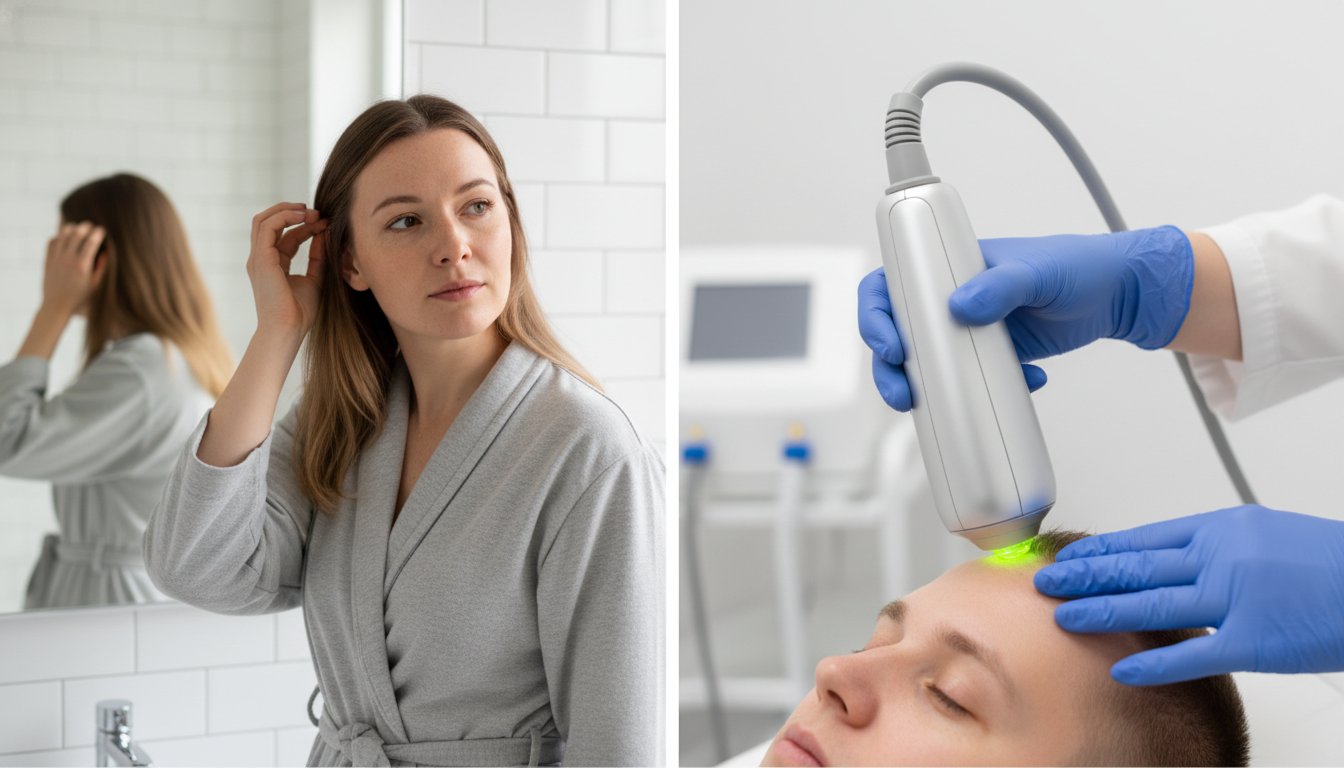
You have likely spent mornings in front of the mirror, noticing the thinning around your temples or the persistent soreness from a style that was just too tight. It's natural to feel a sense of worry when you see more scalp than hair, especially if you fear those follicles have reached a point of permanent scarring.
We understand that this isn't just about aesthetics; it's about restoring your self-image and confidence.
You can reclaim your natural edges with a medically grounded traction alopecia recovery plan designed to stimulate growth whilst the follicles are still viable. This article provides the professional reassurance you need to move from anxiety to proactive, effective solutions.
We will examine the clinical indicators that your hair can still grow back, provide a clear timeline for visible results, and detail the advanced laser treatments used to restore thickness to your hairline.
By understanding the science of your scalp, you can take the necessary steps to stop the damage before the window of opportunity closes.
Key Takeaways
- Learn why identifying the biological window is essential for saving hair follicles before permanent scarring occurs.
- Discover how Low Level Laser Therapy (LLLT) uses clinical science to reactivate dormant follicles and improve hair density.
- Compare the proactive benefits of a professional traction alopecia recovery plan against the limitations of home-based recovery methods.
- Recognise the first four weeks of treatment as a vital stabilisation phase where scalp inflammation and shedding are reduced.
- Understand how specialist hair restoration protocols in Cork and Waterford provide a structured path to restoring your natural hairline.
Table of Contents
-
Understanding the Biological Window for Traction Alopecia Recovery
-
The Clinical Science of Follicle Reactivation and Scalp Health
-
Comparing Professional Clinical Treatments with At Home Recovery
-
A Realistic Timeline for Your Traction Alopecia Recovery Plan
-
Choosing Professional Hair Restoration in Cork and Waterford
If you are concerned about thinning edges or scalp tenderness, you can speak with our clinical team today to assess your suitability for treatment.
Understanding the Biological Window for Traction Alopecia Recovery
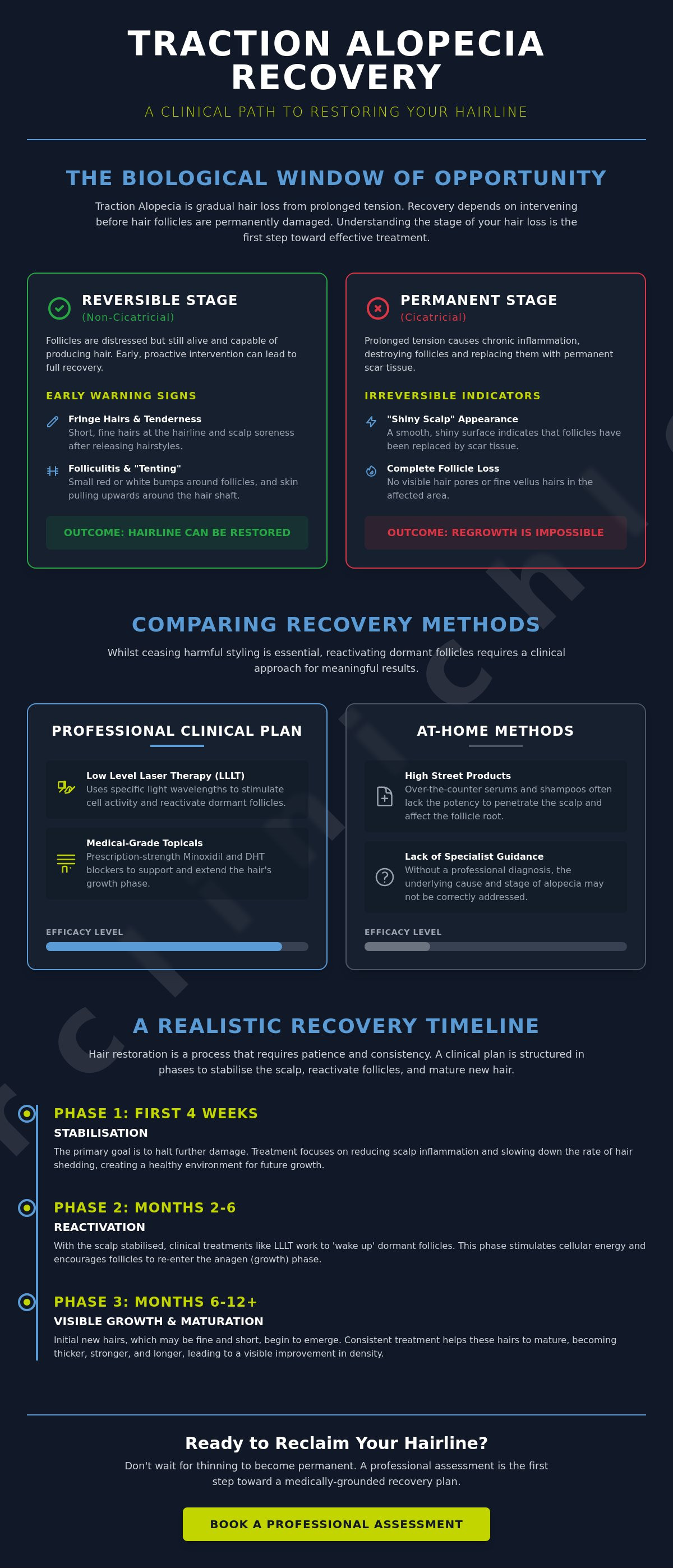
Traction alopecia is a form of gradual hair loss that occurs when persistent, mechanical tension is applied to the hair root over an extended period. Unlike genetic thinning, this condition is usually the result of specific styling habits, such as tight braids, weaves, or heavy extensions. To grasp the full scope of the condition, it helps to understand What is Traction Alopecia? and how it physically alters the scalp environment. The most critical factor in any traction alopecia recovery plan is timing. There is a specific period where the hair follicles are distressed but still functional. If you intervene during this non-cicatricial stage, the hair can often be fully restored. However, if the tension continues, the scalp enters the cicatricial stage, where follicles are replaced by scar tissue, making regrowth impossible.
Losing your hairline can be a deeply distressing experience. It's more than just a physical change; it often impacts how you present yourself to the world and can lead to a significant loss of confidence. We see many patients who feel a sense of regret or worry, but it's important to remember that clinical solutions exist. Early intervention provides the best chance to halt the recession and rebuild density before the damage becomes irreversible. Reassurance comes from a grounded, medical perspective that focuses on what can be saved through proactive care.
Identifying Early Signs of Tension Damage
Before hair loss becomes obvious, your scalp often sends distress signals. You might notice "fringe hairs," which are shorter, finer hairs that remain along the very edge of the hairline whilst the hair behind them thins at the temporal regions. Other symptoms include folliculitis, which presents as small white or red bumps around the follicles, and a phenomenon called "tenting," where the skin is pulled upward around the hair shaft. For those exploring women's hair loss solutions, recognising these early signs of tenderness is the first step toward preservation.
The Difference Between Reversible and Permanent Loss
The transition from reversible thinning to permanent loss is driven by chronic inflammation. As the hair is pulled, the follicle undergoes a process of miniaturisation, becoming smaller and producing weaker strands with each growth cycle. Eventually, the follicle ceases production entirely. A "shiny scalp" appearance is often a clinical sign that the follicle has been replaced by smooth scar tissue. The biological window of opportunity is the timeframe in which the follicle remains alive and capable of responding to clinical stimulation. Once this window closes, the loss becomes permanent.
If you are ready to move beyond temporary fixes and begin a professional recovery, you can book an initial assessment with our specialists to discuss your options.
The Clinical Science of Follicle Reactivation and Scalp Health
Recovering from traction alopecia requires more than just removing the source of tension. Whilst removing the source of pulling is the first step, a structured traction alopecia recovery plan focuses on reactivating follicles that have entered a dormant state due to chronic mechanical stress. Clinical intervention uses a multi-faceted approach to address the biological environment of the scalp. As documented in the Clinical Overview of Traction Alopecia, the pathophysiology involves follicular inflammation that leads to atrophy if left untreated. Professional protocols utilise medical-grade Minoxidil and DHT blockers to support a healthy growth cycle, ensuring that the anagen phase is sustained long enough for visible density to return. High street products often lack the concentration or delivery mechanisms required to penetrate deep enough into the scalp to affect the follicle effectively.
How Laser Hair Therapy Stimulates Regrowth
Laser Hair Therapy, specifically LLLT Laser Treatment, is a cornerstone of professional restoration. This non-invasive technology works through a process called photo-biostimulation. By delivering specific wavelengths of light to the scalp, it increases ATP production at a cellular level and enhances local blood flow. This surge in nutrients and oxygen helps to wake up dormant follicles and prolong the growth phase of the hair. You can explore the science behind laser hair therapy in Ireland to see how this technology supports hair restoration without further physical irritation.
The Role of Scalp Hygiene in Follicle Health
A clean scalp environment is vital for the emergence of fragile new "baby" hairs. Over time, sebum, dead skin cells, and product residue can create a barrier that hinders growth and limits the effectiveness of topical treatments. Clinical scalp hygiene involves deep-cleansing protocols that go far beyond standard domestic washing routines. Clearing these blockages ensures the scalp is perfectly primed for the absorption of hair loss medications, which are essential for long-term maintenance. This level of professional care is what differentiates a successful clinical outcome from a failed "wait and see" approach. If you are unsure which treatments are right for your specific condition, consulting a specialist can provide the clarity you need.
If you suspect your hair follicles require professional intervention, please get in touch with our specialists for a detailed assessment.
Comparing Professional Clinical Treatments with At Home Recovery
Deciding between a self-managed approach and a professional traction alopecia recovery plan often depends on how long the thinning has been visible. At home, the primary strategy is usually a "wait and see" method; you stop the tight braids and hope for the best. Whilst this is a vital first step, it lacks the biological stimulation needed to recover lost density. Clinical therapy, by contrast, is proactive. We use professional scalp analysis to determine if follicles are merely dormant or if they have reached the point of permanent scarring. This diagnostic step is impossible to perform at home, and it prevents you from wasting time on treatments that may no longer be effective for your specific stage of loss.
Using unsupervised topical treatments carries inherent risks. Without a specialist's guidance, you might apply the wrong concentration of active ingredients, which can lead to scalp irritation or allergic reactions. When reviewing traction alopecia treatment options, it becomes clear that a combination of therapies yields far superior results. Combining LLLT Laser Treatment with medical-grade topicals creates a synergistic effect that a single home remedy simply cannot replicate. This structured environment ensures that every aspect of scalp health is addressed simultaneously.
Why Stopping the Pulling Is Only the First Step
Removing the physical cause of tension stops the immediate trauma, but it doesn't necessarily trigger regrowth in weakened follicles. Many follicles remain trapped in the telogen, or resting, phase because the scalp environment is too inflamed or nutrient-depleted to support a new growth cycle. To support your recovery, we advise on protective styling behaviours, such as wearing hair loose or using silk wraps. These habits ensure no further mechanical stress is applied whilst our clinical treatments work to wake up the dormant roots.
The Limitations of Unsupervised Medical Treatments
The needs of the scalp vary significantly between individuals. For instance, the approach for men's hair loss often requires different concentrations of active ingredients compared to women's protocols. Clinical supervision ensures that you are using the correct strength for your specific level of thinning. Regular progress monitoring by a hair loss specialist allows us to adjust your programme based on how your scalp responds, ensuring safety and managing any potential side effects before they become problematic.
To begin your journey toward restoration, you can request a professional consultation with our hair loss experts today.
A Realistic Timeline for Your Traction Alopecia Recovery Plan
Regrowing hair that has been lost to mechanical tension is not an overnight process. It is a biological journey that follows the natural cycles of your hair follicles. A successful traction alopecia recovery plan is divided into distinct phases, each serving a specific physiological purpose. Whilst some improvements appear quickly, achieving full density restoration can take 12 months or longer. This duration depends heavily on the initial level of damage and how long the follicles have been subjected to tension. Patience is your most valuable asset during this time, as we work to reverse months or years of cumulative stress on your scalp.
Phase One The Damage Control Period
The first four weeks are defined as the stabilisation phase. During this time, the primary goal is to soothe the scalp and eliminate all high-tension hairstyles. You must stop the pulling immediately to allow the underlying inflammation to subside. We recommend using silk pillowcases and practising gentle detangling to minimise any further mechanical stress on the weakened roots. This period is also when initial scalp hygiene treatments are most effective. These sessions prepare the follicles by removing debris and priming the skin for clinical stimulation. By the end of this month, you should notice a significant decrease in active shedding and scalp tenderness.
Phase Two The Visible Regrowth Milestone
Between the first and third month, you enter the reactivation phase. This is when LLLT Laser Treatment and clinical topicals begin to shift dormant follicles back into the anagen, or growth, stage. By the three to six month milestone, fine vellus hairs should become visible to the naked eye along the hairline. These new hairs may initially look different in texture or colour, often appearing finer or lighter than your original hair. This is a normal part of the maturation process. Consistency with your LLLT sessions is absolutely pivotal during this stage to ensure these fragile strands transition into stronger, terminal hairs. Remember that hair growth is a slow biological process requiring steady commitment. If you want a personalised estimate for your recovery, contact us to schedule your scalp analysis.
If you would like to arrange a private consultation at one of our local centres, please reach out to our clinical team to find a time that suits you.
Choosing Professional Hair Restoration in Cork and Waterford
The Hair Clinic stands as an independently owned Irish specialist, bringing world-class HLCC protocols directly to the South of Ireland. When you are looking for a traction alopecia recovery plan, having access to local, expert care is essential for maintaining the consistency required for success. We combine a high level of professional authority with a deeply empathetic approach, acknowledging the emotional weight of hair loss whilst providing the scientific rigor needed to treat it effectively. Our clinics in Cork and Waterford are designed to be supportive wellness environments where your journey toward restoration is handled with precision and patience. Every patient receives a bespoke strategy tailored to their specific stage of thinning, ensuring that we address the unique biological needs of your scalp.
Personalised Consultations in Cork and Waterford
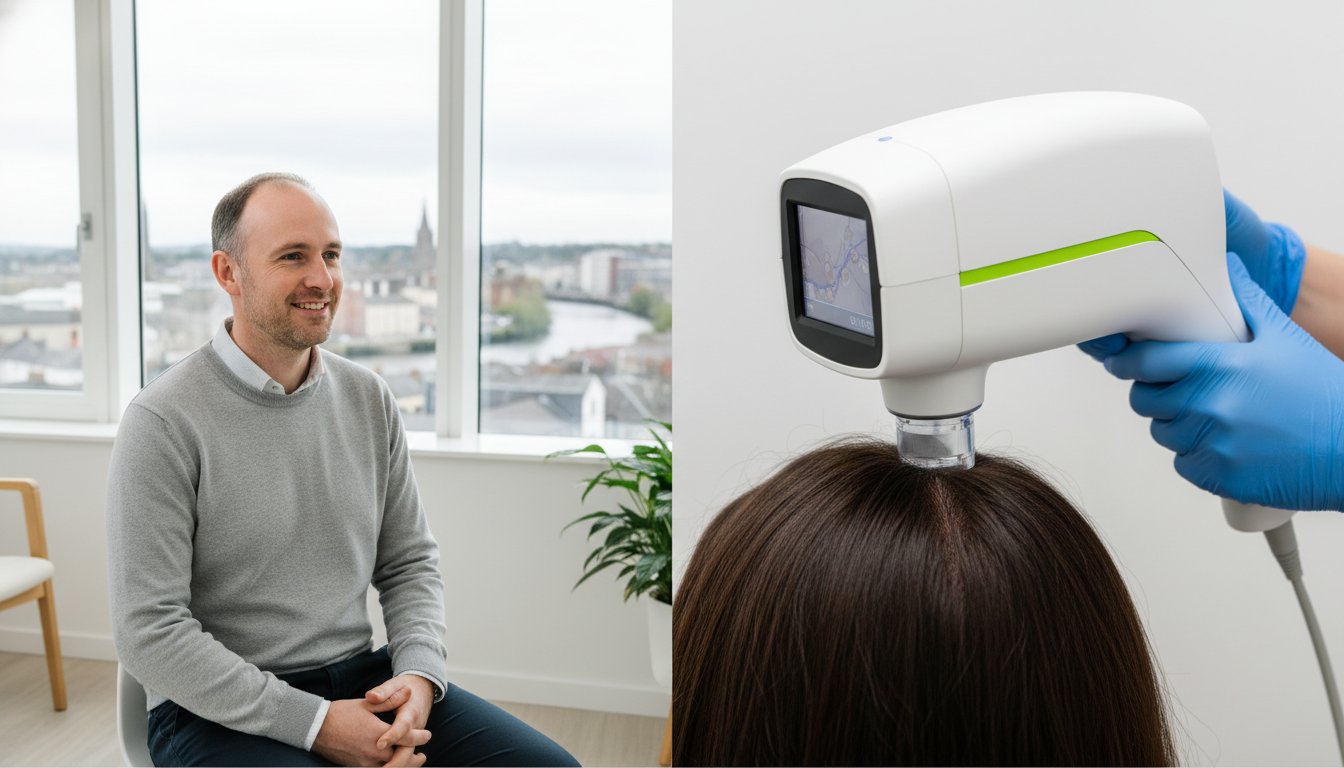
Accessibility is a cornerstone of our service for residents in the South of Ireland. During your first visit to our Cork or Waterford centres, you will undergo a comprehensive scalp analysis. This process includes advanced digital imaging to assess follicle health and a detailed review of your clinical history. We don't just look at the hair loss; we look at the styling habits and scalp conditions that led to it. This thoroughness allows us to provide a sense of security and clarity before you commit to any treatment. For those who feel hesitant, we encourage you to read through our patient testimonials to see real-world success stories from individuals who have successfully reclaimed their hairlines under our care.
Taking the Next Step Toward Hair Restoration
The most effective time to begin a professional traction alopecia recovery plan is the moment you notice the first signs of thinning or scalp tenderness. Delaying intervention only narrows the biological window of opportunity. Starting a professional scalp hygiene treatment in Waterford or Cork ensures that your follicles are primed for regrowth from day one. Our commitment to science-based results means we focus on long-term preservation and the restoration of your self-image. Regaining your confidence is a journey, and as your dedicated partner, we are here to ensure that journey is grounded in safety, effectiveness, and professional expertise. You don't have to face hair loss alone; clinical solutions are available right in your community.
If you are ready to begin your restoration journey, you can contact our clinic to arrange your initial visit with our specialist team.
Start Your Journey to a Restored Hairline Today
Recovering your natural edges requires more than just changing your hairstyle; it demands a clinical understanding of follicle health. By identifying the biological window of opportunity and employing advanced stimulation techniques, you can move beyond the "wait and see" approach. Science shows that proactive reactivation of dormant follicles is the most reliable path to restoring density whilst the hair roots are still viable. Taking action early is the most effective way to prevent permanent scarring and ensure your hair has the best chance to thrive once again.
At The Hair Clinic, we provide a structured traction alopecia recovery plan that leverages over 20 years of expertise in hair restoration. As an independently owned Irish clinic, we utilise world-renowned HLCC treatment protocols to ensure our patients receive the highest standard of care in a supportive environment. Our focus remains on precision, safety, and the long-term health of your scalp. We understand the emotional impact of hair loss and are dedicated to providing a grounded, medical perspective that yields real results.
You can book your complimentary scalp analysis and recovery consultation at The Hair Clinic today to take the first step toward reclaiming your confidence. We look forward to being your partner in restoring both your hair and your self-image.
Frequently Asked Questions
How long does it take for hair to grow back after traction alopecia?
Visible regrowth typically appears between three and six months after beginning a structured treatment programme. The first four weeks focus on the stabilisation phase, whilst the subsequent months involve the reactivation of dormant follicles. Achieving full density restoration often requires twelve months or more of consistent care, as the hair must progress through several natural growth cycles to regain its original strength and thickness.
Can traction alopecia be reversed if the hair has stopped growing?
Reversal is possible as long as the hair follicles remain viable and have not been replaced by scar tissue. Even if active growth appears to have ceased, the follicles may simply be in a prolonged dormant state due to chronic inflammation. A professional clinical assessment is necessary to determine if you are still within the biological window of opportunity for successful reactivation and regrowth.
Is traction alopecia permanent if I have visible bald spots?
Visible bald spots aren't always permanent. They only become irreversible if the condition has progressed to cicatricial alopecia, where the skin becomes smooth and shiny due to scarring. If the follicles are still present, even if they are currently producing no hair, clinical therapies can often stimulate them back into the anagen phase. Early intervention is the most reliable way to prevent these spots from becoming permanent.
What are the best hairstyles to wear during the recovery phase?
The best styles are those that apply zero tension to the hairline and scalp. We recommend wearing your hair loose or in very low, slack styles using silk scrunchies rather than elastic bands. You must avoid all braids, tight ponytails, weaves, and heavy extensions during this time. These protective behaviours ensure that your follicles can heal without the recurring mechanical stress that caused the initial damage.
How much does a professional traction alopecia recovery plan cost in Ireland?
The cost of a traction alopecia recovery plan varies based on the specific treatments required and the duration of the programme. In Ireland, patients typically invest in a combination of initial specialist consultations, clinical scalp hygiene sessions, and ongoing laser therapy. Because every scalp is different, a bespoke quote is usually provided following a digital imaging analysis to ensure the programme matches your specific level of hair loss.
Can I use Minoxidil for traction alopecia without a prescription?
Whilst some concentrations of Minoxidil are available over the counter, unsupervised use can lead to scalp irritation or suboptimal results. Professional guidance ensures that you are using the correct strength and application method for your specific condition. A specialist can also monitor your progress and combine topicals with other clinical therapies to maximise the absorption and effectiveness of the medication without damaging sensitive skin.
Does laser hair therapy really work for a receding hairline?
Laser hair therapy is a scientifically proven method for stimulating cellular activity in dormant follicles. By increasing blood flow and oxygen levels at the scalp, it helps to wake up follicles that have been weakened by tension. This non-invasive treatment is particularly effective for the hairline, as it encourages the transition of fine vellus hairs into thicker, terminal hairs over several months of consistent sessions.
What should I do if my scalp feels sore or itchy after removing braids?
Persistent soreness or itching often indicates active inflammation or folliculitis. You should immediately switch to a gentle, pH-balanced cleansing routine and avoid all hairstyles that pull on the roots. If you notice small bumps or redness, it is a signal that your follicles are under distress. Seeking a professional scalp analysis at this stage can help you address the inflammation before it leads to permanent follicle miniaturisation.
Disclaimer
Please note that the information provided is for general guidance only and should not be taken as professional advice tailored to your specific circumstances.
Find out if Laser Hair Therapy is right for you
At The Hair Clinic, we make managing thinning hair simple and stress free. No more worrying about which products to trust, as we do all the hard work for you. Our Cork & Waterfood teams are here to help you find the perfect, clinically proven treatment plan to suit your goals.
Want to know how laser therapy can stimulate growth and what kind of results you could expect?
No problem. Get in touch with our friendly team today to book your free consultation, and we’ll be happy to help.
Related Hair Treatment News & Guides
If you liked this guide then you may also like the following:
Professional Scalp Consultation for Hair Loss Cork and Clinical Analysis 2026
Did you know that 38.65% of men in Ireland are currently affected by baldness, whilst a 2025 survey revealed that over a quarter of women are deeply worried...
Essential post-FUE care instructions for optimal hair regrowth
Did you know that clinics with structured aftercare protocols report graft survival rates of up to 95 per cent, whilst those without them may see rates...
Hair Loss Treatment for Young Men Cork
Did you know that 49% of Irish men under the age of 30 report experiencing some form of hair loss? It is a startling statistic that proves you are far...
Laser Hair Therapy for Thinning Hair in Cork, The Clinical Guide to Restoration
Did you know that over 80% of Irish men experiencing hair loss report that their confidence is negatively affected? It's deeply distressing to notice...
DHT Blocker Scalp Treatment Ireland | Clinical Hair Restoration Guide
What if the most direct route to thicker hair didn't require the systemic risks of oral medication? For many people, the sight of thinning hair in the...

Best Trichologist in Naas for Professional Hair Loss Treatment
Nearly half of men under 30 in Ireland are already noticing visible thinning, while 1 in 4 women across the country struggle with the emotional weight...