
 2 Camden Pl, Patrick’s Bridge,
Home > Latest News & Guides > Laser Hair Therapy Side Effects for Women and Clinical Safety Facts
Laser Hair Therapy Side Effects for Women and Clinical Safety Facts
Contact us today
Date added: 19/05/26
What if the most effective way to restore your thinning hair didn't involve painful surgery, harsh chemicals, or the risk of thermal burns?
It's completely natural to feel hesitant when researching laser hair therapy side effects women might experience, especially if you've spent years worrying about scalp irritation or sensitive patches.
You might even fear that a laser could worsen your hair loss or mistake these restorative devices for the high-heat lasers used for permanent hair removal.
We understand that your journey toward hair restoration is as much about emotional security as it is about physical results. This article explores the clinical reality of Low-Level Laser Therapy (LLLT) and why this non-invasive treatment has become a leading choice for women seeking to reclaim their confidence.
You'll learn the vital differences between "cold" growth lasers and thermal removal tools, whilst discovering exactly what to expect during a typical session.
We'll also examine the high safety margins of FDA-cleared technology to provide the reassurance you need to act whilst your follicles remain within the biological window of opportunity for effective intervention.
Key Takeaways
- Learn how Low Level Laser Therapy provides a non-invasive, light-based solution for hair restoration with high clinical safety margins.
- Discover the reality of laser hair therapy side effects women may experience, which are usually limited to mild sensations rather than lasting irritation.
- Understand the vital difference between restorative "cold" lasers and the high-intensity heat used in traditional hair removal treatments.
- Identify the specific medical conditions and photosensitivity factors that our specialists evaluate to ensure your treatment is both safe and effective.
- Explore the professional standards and clinical expertise maintained at our Cork and Waterford centres to guide your hair restoration journey.
Table of Contents
If you are concerned about thinning and wish to explore your options with a specialist, please reach out to us through our contact page for professional guidance.
Understanding low level laser therapy safety for women
Low Level Laser Therapy (LLLT) is a non-invasive, light-based treatment designed to revitalise dormant hair follicles. It's often misunderstood because many people associate the word "laser" with the high-heat tools used for surgery or permanent hair removal. However, LLLT is strictly a "cold laser." This means the device does not produce heat or burn tissue, making the profile of laser hair therapy side effects women might encounter exceptionally low. Instead of destroying tissue, these devices use specific wavelengths of light to gently stimulate cellular activity.
The biological mechanism behind this process is known as photobiomodulation. This occurs when red light energy is absorbed by the cells to trigger natural repair and growth cycles. For a detailed look at the clinical history and broader applications of this technology, Understanding Low-Level Laser Therapy provides an excellent overview of how light interacts with human biology. For women, safety is a primary concern, and it's reassuring to know that the first FDA clearance for an LLLT device to treat female pattern hair loss was granted in May 2011. This clearance was based on rigorous data demonstrating that the technology is safe for long-term use.
When evaluating the safety profile of LLLT, several key factors distinguish it from other treatments:
-
Non-thermal action: There is no risk of burns or scarring because the laser does not rely on heat.
-
Non-invasive nature: Unlike surgical options, there are no incisions or recovery periods required.
-
Localised treatment: The light only affects the areas of the scalp where it's applied, avoiding systemic issues.
The science of light and scalp health
Red light wavelengths are specifically calibrated to penetrate the scalp surface and reach the base of the hair bulb. Once the light reaches the follicle, it stimulates the production of Adenosine Triphosphate (ATP). This molecule serves as the primary fuel for our cells, providing the energy needed for follicles to move from a resting phase into an active growth phase. By boosting this cellular energy, LLLT functions as a powerful therapeutic tool to improve hair density and strengthen the hair shaft from within.
Why women choose laser therapy over medication
Many women feel hesitant about pharmaceutical interventions due to potential hormonal disruptions or systemic side effects. Because LLLT is a localised treatment, it doesn't enter the bloodstream or affect the rest of the body. This makes it a preferred choice for women dealing with sensitive scalps or conditions such as Telogen Effluvium, where hair shedding is often triggered by stress or illness. You can find more information on these specific conditions on our womens hair loss page. Choosing a localised, light-based approach allows you to address thinning whilst avoiding the broader complications often associated with long-term medication use.
If you have questions about which treatment is right for your specific needs, please reach out to our clinical team for a detailed discussion.
Laser hair therapy versus laser hair removal side effects
Many women feel a natural sense of hesitation when they hear the word "laser" because they associate it with the stinging heat and discomfort of hair removal. This confusion is one of the biggest barriers to seeking help. It's vital to understand that these two technologies operate on opposite ends of the intensity spectrum. Whilst hair removal lasers use high-intensity thermal energy to intentionally destroy the hair follicle, restorative therapy uses low-intensity light to nourish it. Because of this fundamental difference, the laser hair therapy side effects women often fear, such as blistering or scarring, are not part of the clinical reality of LLLT.
There is also a persistent myth that using lasers on the scalp can cause permanent changes to skin pigmentation. Clinical evidence suggests otherwise. Official documents, including the FDA Safety and Clearance Data, show that in controlled studies, no adverse events related to skin discolouration or tissue damage were reported. This technology is designed to be a gentle biological stimulant, not a destructive tool. If you are feeling overwhelmed by conflicting information, a quick chat with a specialist can help you understand your options more clearly.
Thermal damage versus cellular stimulation
The primary difference lies in the wavelength and power output. Removal lasers target melanin to create a rapid heat reaction that "shuts down" the follicle. Restorative therapy uses a specific red light wavelength that passes through the skin without causing a rise in temperature. This is why you won't need the messy cooling gels or topical anaesthetics typically used in removal clinics. There is also no downtime required. You can walk out of a session and go straight back to work or socialise without any visible redness or irritation. It's a quiet, restorative process that fits easily into a busy lifestyle.
Safety for different skin tones and hair colours
Traditional hair removal often presents risks for women with darker skin tones or very light hair because the laser requires a high level of pigment contrast to function safely. Professional laser hair therapy is far more inclusive. It is safe for all Fitzpatrick skin types and remains effective regardless of whether your hair is blonde, red, or grey. Since the goal is cellular stimulation rather than pigment-based destruction, the treatment provides a consistent safety profile for every woman, regardless of her natural colouring. This inclusivity ensures that restorative care is accessible to everyone.
To discuss your personal hair restoration goals and any concerns you may have about the treatment process, please get in touch with our specialist team for a consultation.
Common sensations and minor effects during treatment
Whilst many women expect a clinical procedure to feel intense, the reality of a session is often quite relaxing. Because LLLT is a cold laser, you won't experience the sharp snapping or burning sensations associated with other light therapies. Instead, the most common laser hair therapy side effects women report are a gentle tingling or a mild feeling of warmth on the scalp. This sensation isn't a sign of heat damage; rather, it's a physical indication of increased microcirculation. As the light energy penetrates the tissue, it encourages blood flow to the follicles, which can create a "pins and needles" feeling that subsides almost immediately after the hood is removed.
Occasionally, a client might report a slight headache during or after their first few sessions. This is rarely a biological reaction to the light itself. It's usually a result of the laser hood being positioned too close to the scalp or an ergonomic issue with how one is seated. Our specialists are trained to adjust the equipment to your specific comfort levels to ensure the experience is entirely stress-free. It's important to remember that any minor sensation you feel is a sign of a proactive biological response. These transient effects indicate that your scalp is responding to the stimulation, moving from a state of dormancy toward active restoration.
Managing the initial shedding phase
One of the most misunderstood aspects of this journey is the temporary shedding phase. It can feel alarming to see hair in the brush when your goal is to stop loss, but this is actually a positive clinical sign. The laser energy encourages follicles to exit the resting phase and enter the active growth phase. To make room for a new, stronger hair shaft, the follicle must first release the old, thin hair. This shedding typically occurs within the first few weeks and generally stops by the twelfth week of treatment. By the twenty-sixth week, most users begin to see a statistically significant improvement in hair counts as the new growth matures.
Scalp sensitivity and temporary redness
If you have a pre-existing condition like seborrhoeic dermatitis or a particularly sensitive scalp, you might notice a very slight pinkness after a session. This is temporary and usually fades within an hour. To minimise any risk of irritation, we always advise that you attend your session with a clean scalp, free from heavy styling products or dry shampoos. Maintaining excellent scalp hygiene ensures that the light can penetrate the skin effectively without being blocked by debris. A clear, healthy scalp environment is the best foundation for ensuring your therapy is both comfortable and successful.
If you are unsure whether your current health status or medications are compatible with LLLT, please book a clinical assessment to ensure your treatment plan is perfectly tailored to your needs.
Safety protocols and contraindications for laser therapy
Whilst Low-Level Laser Therapy is inherently safe, a professional clinical environment prioritises a thorough screening process to eliminate even the smallest risks. Certain medical conditions, particularly those that cause photosensitivity like lupus or certain types of epilepsy, may require a cautious approach or total avoidance of light-based treatments. The clinical assessment is designed to identify any rare laser hair therapy side effects women might face due to underlying medical sensitivities. This is especially vital for women experiencing Telogen Effluvium, where the scalp may already be in a state of high reactivity following a period of physical or emotional stress.
Regarding pregnancy and breastfeeding, there is no clinical evidence suggesting that LLLT is harmful to the mother or the baby. However, as a standard precautionary measure, many specialists advise postponing treatment until after this period. Hormonal shifts during and after pregnancy can significantly alter hair growth cycles, making it difficult to gauge the true effectiveness of the therapy. Additionally, whilst the lasers are "cold," eye protection remains a mandatory safety protocol. Even low-level light can be bright enough to cause eye strain or discomfort if looked at directly, so we provide specialised safety goggles for every session. To ensure your journey is safe and effective, we invite you to schedule a professional screening with our team.
When to postpone your laser hair sessions
Temporary factors can sometimes mean it is best to wait a short while before starting or continuing your programme. For instance, if you are currently taking medications that increase light sensitivity, such as certain antibiotics or specific acne treatments like Roaccutane, your sessions should be put on hold. Active scalp infections, open wounds, or severe sunburn also serve as temporary barriers to treatment. We also recommend a brief waiting period of at least 48 hours after chemical hair treatments or colouring. This ensures the scalp has fully recovered from any chemical irritation before the laser stimulation begins.
Identifying high quality clinical laser equipment
Not all laser devices are created equal. There is a significant difference between medical-grade clinical lasers and the inexpensive at-home devices found online. Clinical equipment utilises a higher density of laser diodes to ensure consistent energy delivery across the entire scalp. This precision is what allows for a predictable safety profile and better results. When you choose a regulated clinical environment, you are benefiting from technology that is maintained to the highest standards, reducing the risk of ineffective treatment or unexpected skin reactions. Precision and safety are the cornerstones of a successful restoration programme.
If you are ready to take the next step in your hair restoration journey, please connect with our specialists to arrange a consultation at one of our Irish centres.
Professional laser hair therapy at The Hair Clinic
At The Hair Clinic, we understand that hair loss is a deeply personal experience that requires more than just technology; it requires a dedicated partner in your recovery. Our centres in Cork and Waterford are staffed by professionals who specialise in the clinical application of light-based restoration. We pay close attention to the laser hair therapy side effects women might be concerned about, ensuring every session is conducted with the highest safety standards and professional oversight. We don't believe in a one-size-fits-all approach. Every journey begins with a rigorous personalised assessment to confirm that LLLT is the right biological match for your specific type of thinning.
To achieve enhanced results, we often integrate our LLLT Laser Treatment into a multi-therapeutic plan that may include DHT blockers. This synergy addresses the root causes of hair loss from multiple angles whilst maintaining the non-invasive safety profile our clients value. Our commitment to transparent and empathetic care means you'll always have a clear understanding of your progress and the science behind your treatment plan. We aim to move you from a state of worry toward a proactive, solution-seeking mindset, grounded in medical reality rather than unrealistic promises.
Our clinical approach in Cork and Waterford
Having a specialist monitor your progress is one of the most significant advantages of choosing a clinical setting over at-home alternatives. Our team follows the HLCC global treatment protocols, which are recognised for their rigorous safety and efficacy standards. This ensures that your exposure to light energy is precisely managed to avoid any unnecessary sensitivity or ineffective application. We encourage you to read through our patient testimonials to see how other women across Ireland have successfully navigated their restoration journey with our professional support.
Starting your hair restoration journey safely
The first step is always an in-depth scalp analysis using specialised diagnostic tools. This allows us to determine the underlying cause of your loss, whether it's genetic thinning or a temporary condition such as Telogen Effluvium. We provide a supportive, private environment where women facing hair thinning can feel heard and validated. By identifying the specific biological stage of your hair follicles, we can ensure you aren't wasting the critical window of opportunity on treatments that won't work for your specific condition. Reclaiming your self-image starts with a clear, fact-based plan. To discuss your safety concerns and begin your personalised programme, the best path forward is to book a consultation with our clinical team today.
Your path to hair restoration and renewed confidence
Restoring your hair is a journey that requires both clinical precision and a supportive environment. We've explored how Low-Level Laser Therapy serves as a gentle, non-invasive stimulant that works with your body's natural cycles rather than against them. By choosing a professional setting, you ensure that any concerns regarding laser hair therapy side effects women might experience are addressed through expert screening and medical-grade equipment. Our protocols are built upon HLCC global standards and backed by over 20 years of expertise in specialised care for female hair loss conditions. This level of oversight provides the quiet reassurance you need to move forward with hope.
Take the first step toward reclaiming your confidence today. Book your complimentary hair and scalp analysis at The Hair Clinic to understand the root cause of your thinning. Our specialists are ready to guide you through a safe, effective, and personalised restoration programme. You don't have to face hair loss alone; a proactive and proven solution is within reach.
Frequently Asked Questions
Is laser hair therapy safe for long term use in women?
Yes, Low-Level Laser Therapy is considered exceptionally safe for long-term application as it does not involve ionising radiation. Since the first clearance for female use in 2011, clinical data has shown no evidence of cumulative damage to the scalp or hair follicles. Consistent use is required to maintain results, and many women incorporate it into their permanent wellness routine without experiencing adverse laser hair therapy side effects women might worry about.
Does laser hair therapy cause cancer or other serious illnesses?
No, there is no clinical link between LLLT and cancer. The devices use non-ionising red light wavelengths that lack the energy to damage DNA or cause cellular mutations. Unlike ultraviolet light, which can be harmful, the visible red light used in this therapy is restorative. It remains localised to the scalp and does not impact your internal organs or systemic health in any way.
Can I use laser hair therapy if I am pregnant or breastfeeding?
We generally recommend postponing your sessions until after you have finished breastfeeding. This isn't due to a documented risk, but rather a standard clinical precaution. Hormonal shifts during pregnancy can cause significant hair shedding or growth changes, making it difficult to monitor the effectiveness of the therapy. It's always best to let your body stabilise before beginning a new restoration programme.
Will laser hair therapy cause my scalp to burn or itch?
No, because these are cold lasers that do not produce thermal energy. You won't experience the burns or blisters associated with high-heat removal lasers. Whilst a very small number of women might feel a slight itchiness due to increased blood flow, this is transient. It usually indicates that the microcirculation in your scalp is improving, which is a positive sign that the follicles are receiving more nutrients.
Does laser hair therapy hurt during the session?
The treatment is entirely painless and non-invasive. Most women find the experience quite relaxing and feel nothing at all whilst sitting under the laser hood. A few individuals report a very mild tingling sensation or a faint feeling of warmth, but there is never any sharp pain or discomfort. You can return to your normal activities immediately after the session without any lingering soreness.
What happens if I stop laser hair therapy after starting it?
If you discontinue the treatment, your hair loss will eventually return to its previous pattern. LLLT is a management tool that requires ongoing sessions to keep the follicles in the active growth phase. If the stimulation stops, the biological benefits will gradually diminish over several months. It's important to view this as a long-term commitment to maintaining your hair density and scalp health.
Can laser hair therapy cause more hair to fall out initially?
Yes, a temporary increase in shedding is a common and positive sign that the treatment is working. This occurs because the laser energy encourages the follicle to enter a new growth cycle, which pushes out the old, resting hair shaft. This process, often called shedding, typically resolves within the first few months. It's a necessary step to make room for thicker, healthier hair growth.
Is it safe to use laser therapy alongside minoxidil or other medications?
Yes, it's perfectly safe and often recommended to use LLLT in conjunction with other treatments. This multi-therapeutic approach can actually enhance your results by addressing hair loss through different biological pathways. Many women find that addressing laser hair therapy side effects women might worry about whilst using topical solutions provides a more comprehensive result. Always discuss your current medication list with a specialist to ensure the most effective plan.
Article by
Mark O'Sullivan
As Director of The Hair Clinic in Cork and Waterford, I am dedicated to helping our patients address their hair loss through expert trichological care. Our team provides professional laser hair treatments and personalised solutions to help clients restore their confidence.
Disclaimer
Please note that the information provided is for general guidance only and should not be taken as professional advice tailored to your specific circumstances.
Find out if Laser Hair Therapy is right for you
At The Hair Clinic, we make managing thinning hair simple and stress free. No more worrying about which products to trust, as we do all the hard work for you. Our Cork & Waterfood teams are here to help you find the perfect, clinically proven treatment plan to suit your goals.
Want to know how laser therapy can stimulate growth and what kind of results you could expect?
No problem. Get in touch with our friendly team today to book your free consultation, and we’ll be happy to help.
Related Hair Treatment News & Guides
If you liked this guide then you may also like the following:
Traction Alopecia Recovery Plan and Professional Clinical Solutions
Your hairline isn't necessarily gone for good, but the clock is ticking on its biological ability to recover.You have likely spent mornings in front...
Hair loss due to medication what to do and how to recover
What if the very prescription helping your body recover is the reason you are noticing more hair in the shower drain each morning?It is a distressing...
Low Level Laser Therapy for Hair Growth and Restoration
Did you know that over 50% of women and 53% of men experience the emotional burden of thinning hair before age 50?It's a common experience, yet the fear...
The Science of Scalp Detox Benefits for Hair Growth and Follicular Health
What if the sophisticated serums you are applying to your thinning hair are simply sitting on the surface, unable to reach the follicles they are...
Professional Scalp Consultation for Hair Loss Cork and Clinical Analysis 2026
Did you know that 38.65% of men in Ireland are currently affected by baldness, whilst a 2025 survey revealed that over a quarter of women are deeply worried...
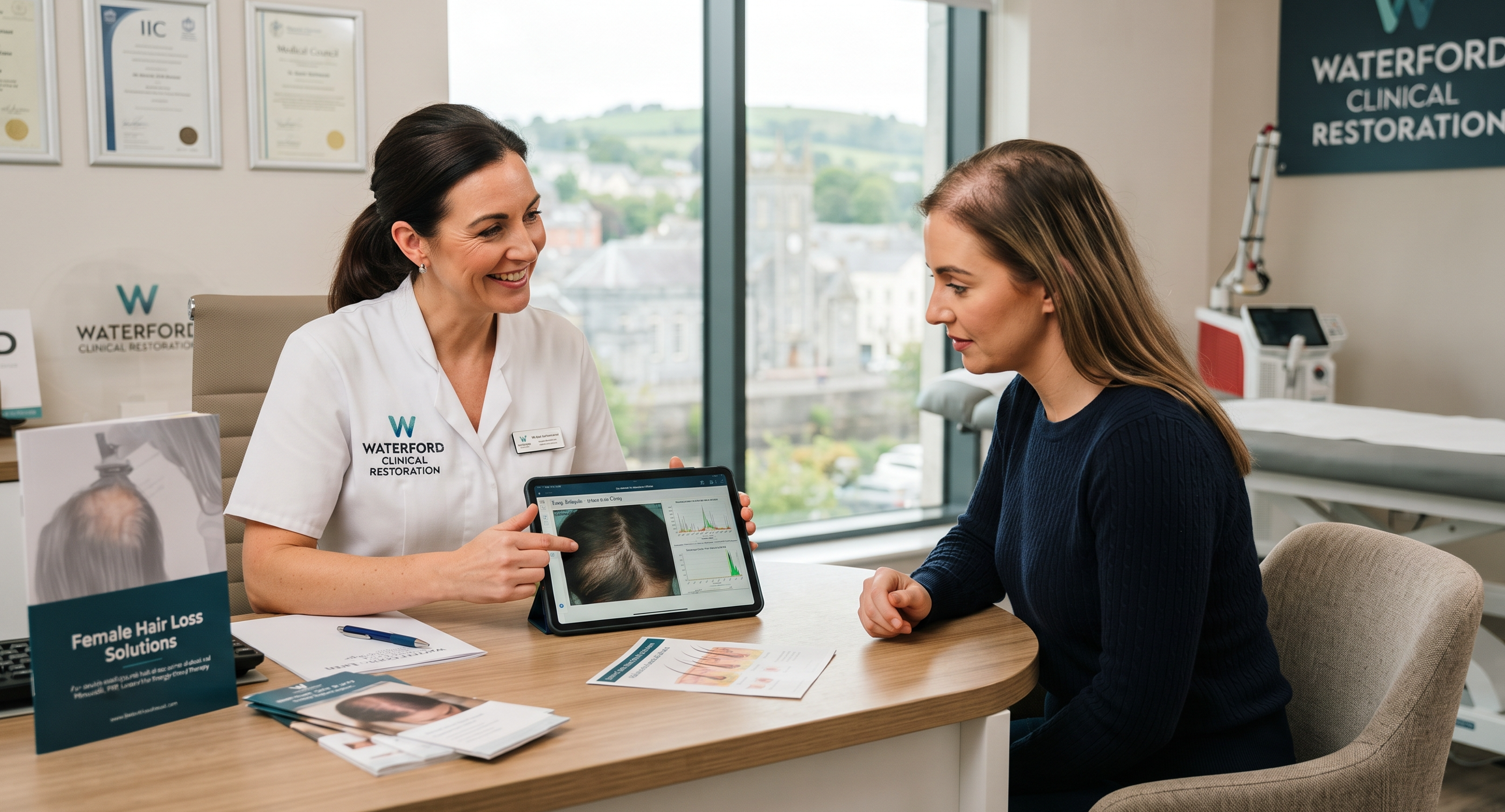
Female Pattern Hair Loss Treatment in Waterford for Clinical Restoration
Did you know that 28% of women in Ireland now rank thinning hair as their primary beauty concern?It's a distressing experience to look in the mirror...