
 2 Camden Pl, Patrick’s Bridge,
Home > Latest News & Guides > Hair loss due to medication what to do and how to recover
Hair loss due to medication what to do and how to recover
Contact us today
Date added: 02/10/26
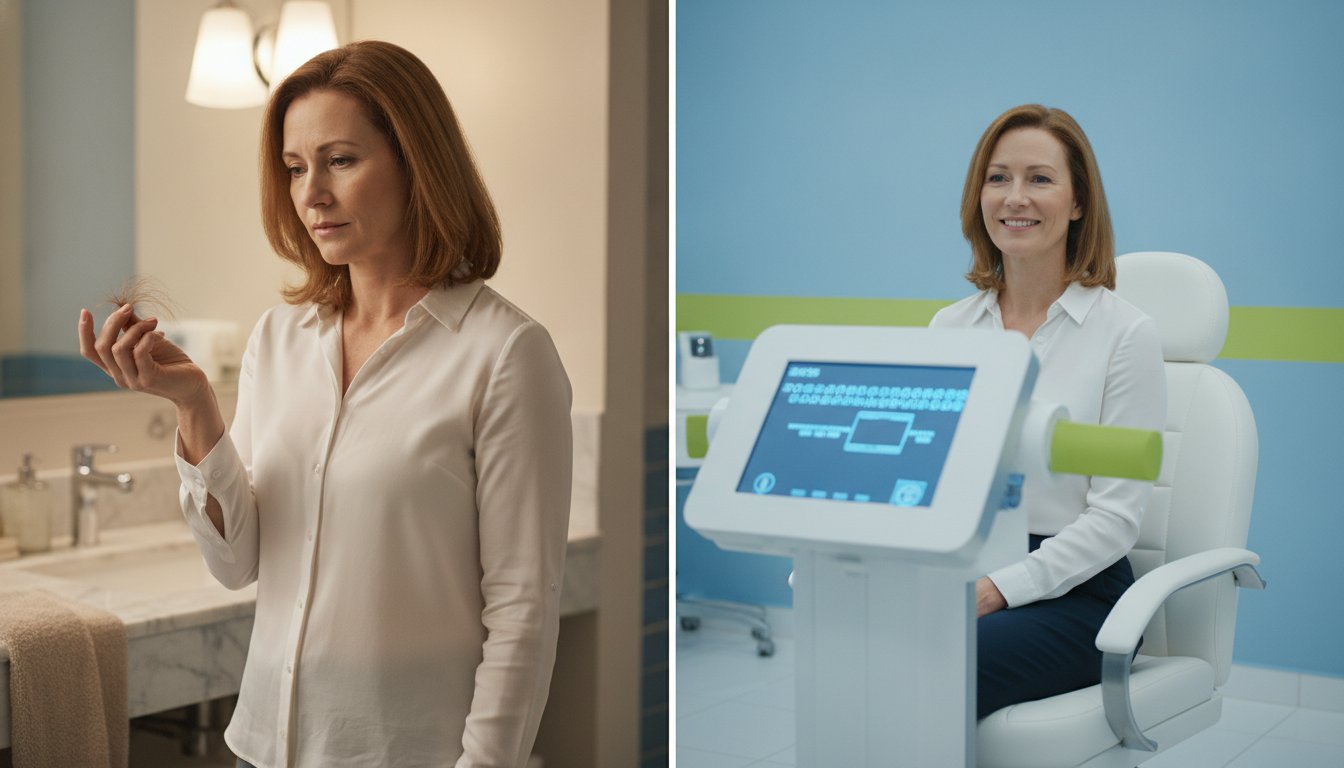
What if the very prescription helping your body recover is the reason you are noticing more hair in the shower drain each morning?
It is a distressing paradox to face, especially when you are already managing an existing health condition. If you are worried about hair loss due to medication, your main question is likely what to do next.
You might feel a deep sense of anxiety about your changing appearance or fear that this thinning is a permanent side effect you must simply accept whilst you complete your treatment.
We understand that the internal conflict between your vital medication and your self-confidence is incredibly heavy.
This clinical guide will help you identify whether your hair shedding is truly drug-induced and provide a clear, practical plan to support healthy regrowth.
You will gain a grounded understanding of the biological triggers involved and the professional steps available at our centres in Cork, Naas , and Waterford to safely restore your hair density.
By focusing on proven clinical support and laser hair therapy, we can help you move from worry to a proactive solution for your hair health.
Key Takeaways
- Understand how specific pharmaceutical treatments can disrupt your natural growth cycle by prematurely pushing follicles into a resting phase.
- Discover the essential methods for tracking your shedding patterns to better understand hair loss due to medication and what to do to initiate a successful recovery.
- Identify the common categories of drugs, including anticoagulants and hormonal treatments, that are frequently linked to temporary thinning.
- Learn why maintaining professional scalp hygiene and seeking a clinical assessment are vital first steps in supporting new hair growth.
- Explore how non-invasive Low Level Laser Therapy energises dormant follicles and increases blood flow to restore hair density.
If you are concerned about sudden shedding, contact our specialists today for a professional assessment.
Understanding why certain medications cause hair thinning and shedding
Drug-induced hair loss is a recognised clinical side effect of various pharmaceutical treatments. It often catches patients by surprise because the thinning does not always happen immediately.
If you are currently navigating hair loss due to medication, what to do is often a source of great anxiety; however, understanding the mechanism of this side effect is the first step toward recovery.
Unlike genetic thinning, which typically follows a predictable pattern over many years, medication-induced loss is often sudden and diffuse across the entire scalp. This means you might notice a general loss of volume rather than a specific receding hairline or bald patch.
You may feel overwhelmed by the prospect of losing your hair whilst managing other health concerns. We want to offer you quiet reassurance that for the vast majority of people, this condition is not permanent.
It is a temporary disruption of the growth cycle, not destruction of the follicle itself.
Once we identify the trigger and provide the right clinical support, your follicles can return to their natural growth rhythm.
Our team at the medication-induced hair loss clinic specialises in these transitions, helping you bridge the gap between clinical necessity and restoring your self-image.
We focus on the biological window of opportunity to ensure the best possible regrowth outcomes.
The hair growth cycle and how drugs disrupt it
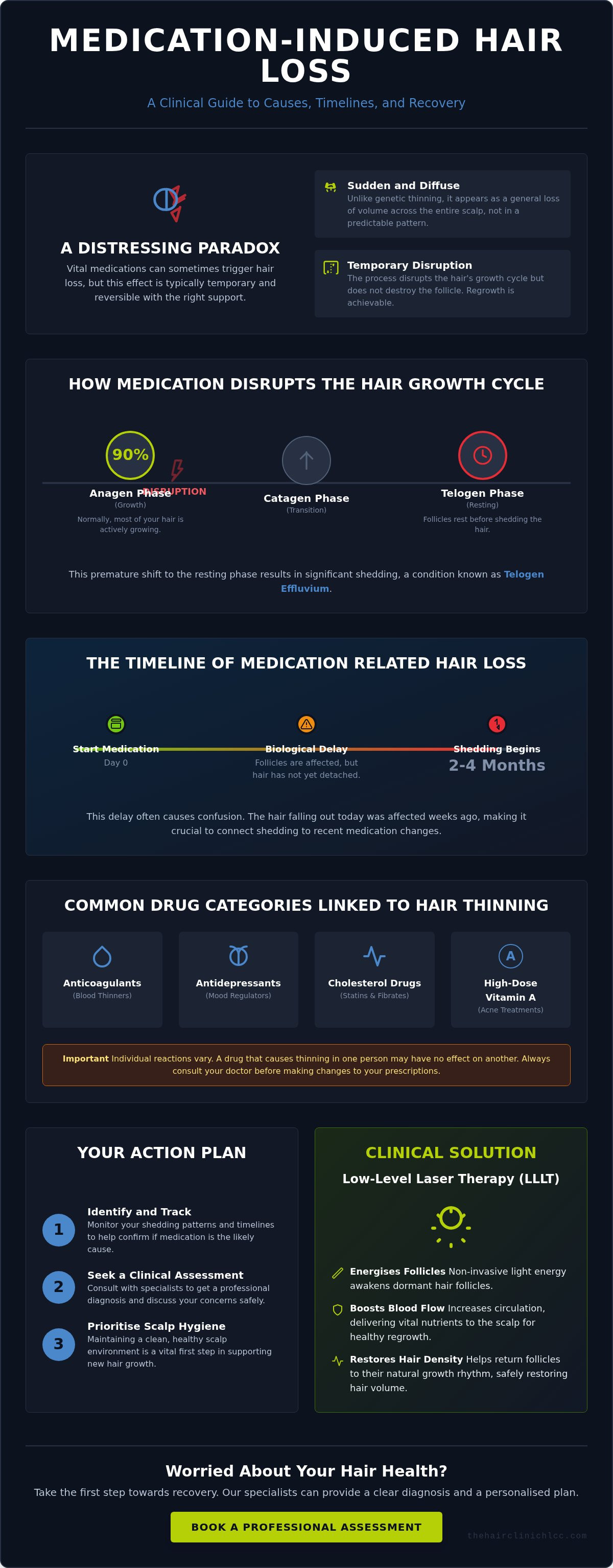
Your hair naturally moves through three distinct stages: anagen (growth), catagen (transition), and telogen (resting). Under normal conditions, about 90% of your hair is in the growth phase at any given time.
Certain medications can shock the system, forcing a high percentage of hairs to enter the resting phase prematurely.
A deeper look at Understanding Hair Loss (Alopecia) shows that this physiological shift is often a survival mechanism in which the body redirects resources. When this happens, the follicle stops producing a new hair shaft and prepares to shed the old one.
Telogen effluvium is a temporary form of hair loss caused by a physiological stressor.
The timeline of medication-related hair loss
A specific biological window often confuses patients. You might start a new prescription and see no changes for several weeks, leading you to believe the drug is safe for your hair.
Typically, hair loss appears two to four months after starting a new drug. This happens because the hair falling out today was actually affected weeks ago. It takes time for the hair to physically detach and exit the follicle after the growth cycle has been interrupted. Recognising this shed is the first step toward finding a solution.
We help you understand this timeline to ensure you don't stop vital medications without a professional plan in place.
By tracking these changes, we can develop a step-by-step plan to support your hair density whilst you continue your medical treatment.
To discuss your specific medication and hair health, book a consultation with our clinical team.
Common drugs linked to hair loss and their typical behaviour
Many people are aware that chemotherapy causes hair loss, but they are often surprised to learn that everyday prescriptions can have similar effects.
If you are experiencing medication-related hair loss, start by identifying the potential culprit among your current prescriptions.
Common categories linked to thinning include anticoagulants (blood thinners), antidepressants, and cholesterol-lowering drugs. These medications affect people differently.
Your unique biology determines how your follicles respond to specific chemical compounds, meaning a drug that causes shedding in one person may have no effect on another.
A Clinical review of drug-induced hair loss highlights that even high doses of Vitamin A, often found in intensive acne treatments, can trigger significant shedding.
This happens because excessive Vitamin A can overstimulate the hair follicles, leading them to transition too quickly from the growth phase to the resting phase.
While this can be alarming, the follicles usually remain healthy and can regrow once the system is balanced.
Our role is to provide the clinical support needed to help your scalp recover its density as quickly as possible.
Blood pressure and heart medications
Beta blockers and ACE inhibitors are essential for cardiovascular health, yet they are frequently associated with diffuse thinning.
These medications can alter the blood flow to the scalp or interfere with the cellular metabolism of the hair bulb.
If you suspect your heart medication is affecting your hair, you must never stop taking it without consulting your GP first. Instead, speaking with a hair loss specialist Waterford can provide you with a strategy to manage the thinning whilst staying on your vital prescription. We often use Laser Hair Therapy Waterford to help energise follicles suppressed by these treatments.
Hormonal treatments and mood stabilisers
Shifts in hormone levels are a primary driver of changes in hair density. Certain birth control pills, thyroid medications, and mood stabilisers can disrupt the hormonal balance, often mimicking the appearance of female pattern hair loss. This type of thinning usually shows up as a widening part or overall loss of volume across the top of the head.
If you're navigating these challenges, our women's hair loss page offers deeper insights into how hormonal fluctuations affect the scalp environment.
Recovery is possible with the right clinical approach. If you feel your appearance is changing because of a new prescription, a professional scalp analysis can clarify your options and restore your peace of mind.
If you are concerned about your shedding, speak to our clinical team today for a professional assessment at our Cork or Waterford centres.
How to identify if your medication is the primary cause
Pinpointing the exact cause of hair thinning requires a methodical approach. If you're managing medication-related hair loss, start by building a clear picture of your personal timeline.
Begin by reviewing the patient information leaflet that came with your prescription.
This document lists known side effects, and you may find hair thinning or shedding mentioned under a specific frequency category such as "uncommon" or "rare." Knowing this upfront removes the guesswork and gives you a concrete starting point for a conversation with your doctor.
Beyond the leaflet, pay close attention to changes in your hair's texture and your scalp's physical condition.
Drug-induced shedding is rarely an isolated symptom. Some people notice their remaining hair feels finer or more brittle than before, whilst others experience mild scalp tenderness or a heightened sensitivity to touch.
These accompanying signs are clinically significant because they suggest a systemic disruption rather than a localised scalp condition. The drugs that can cause hair loss are wide-ranging, and understanding these physical signals helps you distinguish between a drug reaction and the early stages of genetic thinning, which typically presents without scalp discomfort.
Keeping a simple hair-shed diary is one of the most practical tools you have. Each morning, note the approximate volume of hair on your pillow, in your brush, and in the shower drain.
Over 2 to 3 weeks, a clear pattern will emerge. If the volume spiked around the same time you started or increased a new prescription, that correlation becomes valuable clinical evidence.
Tracking the timeline of your hair loss
Write down the exact date you began your medication and compare it to when you first noticed increased shedding. As covered earlier in this guide, there is typically a 2- to 4-month delay between the biological disruption and visible loss.
A simple self-assessment called the pull test can help gauge severity. Gently grasp a small section of around 40 to 60 hairs between your fingers and pull slowly from root to tip. Consistently losing more than 5 or 6 hairs suggests active shedding that warrants professional review.
Hair loss within days of starting a drug is uncommon and generally linked to specific chemotherapy agents rather than everyday prescriptions.
Consulting your GP and a hair loss specialist
Arriving at your GP appointment prepared makes a significant difference. Consider asking these specific questions to get the most from that conversation:
- Is hair thinning a documented side effect of my current prescription?
- Are there alternative medications in the same therapeutic class that carry a lower risk of hair loss?
- Could adjusting my dosage reduce the impact on my hair growth cycle?
- Are there any blood tests that could rule out a co-existing cause such as a thyroid imbalance?
Your GP can address the pharmaceutical side, but a dedicated scalp analysis provides a different layer of insight.
At The Hair Clinic, our specialists use clinical assessment tools to examine follicle health and scalp condition directly, giving you a far clearer picture than a visual check alone. Our medication-related consultations in Cork, Nass, and Waterford are designed for patients in this exact situation, helping you understand your follicles' current state and what targeted support you need to encourage recovery.
Understanding hair loss due to medication and what to do next becomes far less daunting when you have a specialist walking alongside you through each step.
To start your recovery journey, book your initial scalp assessment here.
Practical steps for managing hair loss due to medication
Once you suspect your treatment is the culprit, having a clear recovery roadmap is essential. When dealing with medication-related hair loss, start by shifting your focus from worry to active scalp preservation.
This begins with a formal consultation to confirm the cause of the shedding and rule out other factors. We then move through a structured 5-step process designed to stabilise your follicles and prepare them for new growth.
This proactive approach ensures you aren't just waiting for the medication to end, but are instead creating the best possible environment for your hair to return.
Following a consultation, we focus on mechanical and biological support. Gentle hair care practices are vital during this time to avoid further mechanical damage.
Avoid high heat from styling tools and steer clear of tight hairstyles that put tension on the roots. These small changes prevent unnecessary breakage while your follicles are vulnerable. Finally, we consider clinical interventions to stimulate the anagen growth phase.
With targeted therapies, we can often encourage hair to return to its growth cycle sooner than it would if left alone.
Organising a scalp hygiene routine
A clean scalp is essential for hair trying to regrow. If you neglect the scalp environment, sebum and environmental pollutants can build up, potentially hindering the emergence of new, fine hairs. We recommend avoiding harsh chemicals or sulphate-heavy shampoos that can strip the scalp of its natural protective oils.
Instead, professional scalp hygiene treatments can remove stubborn sebum and debris that home washing might miss.
This ensures every follicle has a clear path to the surface, which is critical for restoring your previous hair density.
Nutritional support and lifestyle adjustments
Your body needs specific building blocks to produce healthy hair, especially when recovering from a physiological shock.
We focus on optimising your intake of iron, zinc, and biotin, as these are the primary nutrients involved in follicle cell division. A balanced diet provides the essential amino acids required for keratin production.
Beyond nutrition, reducing overall physiological stress helps the body redirect energy away from non-essential functions like hair growth. When the body is under high stress, it often deprioritises the hair growth cycle to protect vital organs.
By managing your lifestyle and nutrition, you signal to your body that it is safe to begin the regrowth process.
If you want to see how these steps fit into a personalised programme, request a call from our specialist team.
If you are ready to take the next step in your recovery, book your consultation with us today.
Clinical solutions to support and speed up regrowth
When you're experiencing medication-related hair loss, the key is finding solutions that work alongside your prescription.
Many patients cannot simply stop their vital treatments, which is why we focus on clinical interventions that protect the follicle whilst the drug is still in the system. Low Level Laser Therapy (LLLT) has emerged as a cornerstone of this approach.
It is a non-invasive, painless method that energises dormant follicles and prevents them from staying in the resting phase for too long. This therapy provides a proactive way to maintain your appearance without compromising your medical recovery.
The science behind this technology is grounded in cellular stimulation. Laser light penetrates the scalp tissue to stimulate the mitochondria within the hair bulb. This process increases adenosine triphosphate (ATP) production, the primary energy source for cellular repair and growth.
By increasing cellular energy and improving local blood flow, we can often speed the transition back to the anagen growth phase.
These clinical interventions are safe and have no known major side effects, making them an ideal choice for individuals who are already managing complex health issues.
In addition to laser treatments, we often utilise topical supports and DHT blockers to preserve your existing hair density. These professional-grade solutions help to stabilise the scalp environment and ensure that the hair follicles not currently affected by your medication remain as robust as possible.
This multi-layered approach ensures that you are not just waiting for the shedding to stop, but are actively working to minimise the impact on your self-image.
Low-level laser therapy for follicular stimulation
The success of LLLT laser treatment in our clinics has helped many individuals regain their density after a physiological shock.
Laser therapy is particularly effective for those who cannot change their medication, as it works independently of the drug's systemic effects to keep the follicle active. Sessions are entirely painless and typically last around 20 to 30 minutes.
This makes the treatment easy to fit into a weekly routine, so you can prioritise your hair health without adding stress to your schedule.
Professional support in Cork and Waterford
We encourage you to visit our local clinics in Cork or Waterford for a tailored treatment programme that addresses your specific needs. Every scalp is different, and a personalised plan is the most effective way to ensure a full recovery.
You can see the results for yourself on our testimonials page, where many of our previous patients share their journeys of restoring their hair and confidence.
Acting early is the best way to support the follicles before they enter a prolonged state of dormancy. Our team provides the clinical expertise and quiet reassurance you need to navigate this challenging time.
If you are ready to discuss your recovery, contact our specialist team today.
Take the first step toward restoring your hair density
Navigating the complex relationship between your medical health and your appearance requires both clinical precision and empathy. As we have explored, medication-induced shedding is typically a temporary disruption of the growth cycle rather than a permanent loss.
By identifying the timeline of your shed and supporting your follicles through the biological recovery window, you can bridge the gap between medical necessity and your self-image.
If you are currently facing hair loss due to medication, what to do next should focus on professional intervention rather than waiting in uncertainty.
With over 20 years of experience in hair restoration, our specialist clinics in Cork and Waterford provide the expertise needed to manage these transitions safely. We utilise advanced LLLT laser technology protocols to energise suppressed follicles and encourage a swift return to the growth phase.
You don't have to navigate this journey alone. We invite you to book your complimentary hair loss consultation at The Hair Clinic to receive a personalised recovery plan. A clear path back to your natural density exists, and we are here to support you every step of the way.
Frequently Asked Questions
Will my hair grow back after I stop the medication?
Yes, for most patients, hair will naturally regrow once the offending medication is discontinued. Most drug-induced hair loss is temporary, with follicles pushed into a resting phase rather than permanently damaged.
Recovery typically begins within 3 to 6 months after the treatment ends. However, seeking professional scalp support during this transition can help ensure the new growth is as healthy and dense as possible.
How long does it take for hair to fall out after starting a new drug?
Visible shedding usually begins two to four months after you start a new pharmaceutical treatment.
This delay occurs because the medication triggers a shift in the growth cycle, but it takes several weeks for the hair to physically detach and exit the follicle. If you are worried about medication-related hair loss, track your start date and confirm this timeline with a specialist during your assessment.
Can I stop taking my medication if I notice hair loss?
You should never stop or alter a prescribed medication without first consulting your GP or specialist.
While hair thinning is emotionally distressing, the medication is likely vital for your underlying health. A doctor can often suggest alternative drugs with a lower risk of shedding or adjust your dosage to reduce side effects.
We work alongside your medical team to support your hair whilst you continue your necessary treatment.
Are there specific vitamins that help with drug-induced thinning?
Yes, specific nutrients such as iron, zinc, and biotin are essential during the recovery phase.
These nutrients provide the building blocks for keratin production and support the rapid cell division needed for new hair growth.
While supplements can help, they are most effective as part of a broader clinical plan that includes proper scalp hygiene and professional monitoring to ensure your follicles have the best environment to thrive.
Is laser hair therapy effective for medication-related loss?
Low Level Laser Therapy (LLLT) is highly effective for treating medication-related hair loss because it directly energises dormant follicles.
The laser light stimulates ATP production at a cellular level, which encourages follicles to exit the resting phase and return to active growth.
This non-invasive approach is particularly useful for patients who must remain on their medication, as it provides a way to actively preserve density whilst the systemic trigger is still present.
Should I see a specialist in Cork or Waterford for a diagnosis?
Visiting our specialist clinics in Cork or Waterford is highly recommended for an accurate diagnosis and a personalised recovery plan.
A specialist can perform a detailed scalp analysis to distinguish between temporary drug-induced shedding and other forms of thinning. Early intervention at a local centre ensures you receive the correct clinical protocols.
Understanding medication-related hair loss and what to do becomes much simpler when you have access to local, professional expertise.
What is the difference between thinning and shedding?
Shedding refers to the active loss of hair strands, often resulting in more hair in your brush or shower drain.
This is the typical reaction to medication. Thinning usually describes the gradual reduction in the diameter of individual hairs, which is more common in genetic pattern loss.
Understanding this distinction is vital for determining the correct treatment. Shedding is often a temporary reaction to a stressor, whereas thinning requires a long-term preservation strategy.
Can stress from being ill make the hair loss worse?
Yes, the physiological stress of an illness can certainly compound the effects of your medication.
When the body is under significant strain, it often redirects energy away from non-essential functions like hair growth to focus on vital organ recovery.
This can lead to a more pronounced shed. Managing your overall well-being and reducing stress levels where possible will help your body refocus on the hair growth cycle once your health and medication levels stabilise.
Disclaimer
Please note that the information provided is for general guidance only and should not be taken as professional advice tailored to your specific circumstances.
Find out if Laser Hair Therapy is right for you
At The Hair Clinic, we make managing thinning hair simple and stress free. No more worrying about which products to trust, as we do all the hard work for you. Our Cork & Waterfood teams are here to help you find the perfect, clinically proven treatment plan to suit your goals.
Want to know how laser therapy can stimulate growth and what kind of results you could expect?
No problem. Get in touch with our friendly team today to book your free consultation, and we’ll be happy to help.
Related Hair Treatment News & Guides
If you liked this guide then you may also like the following:
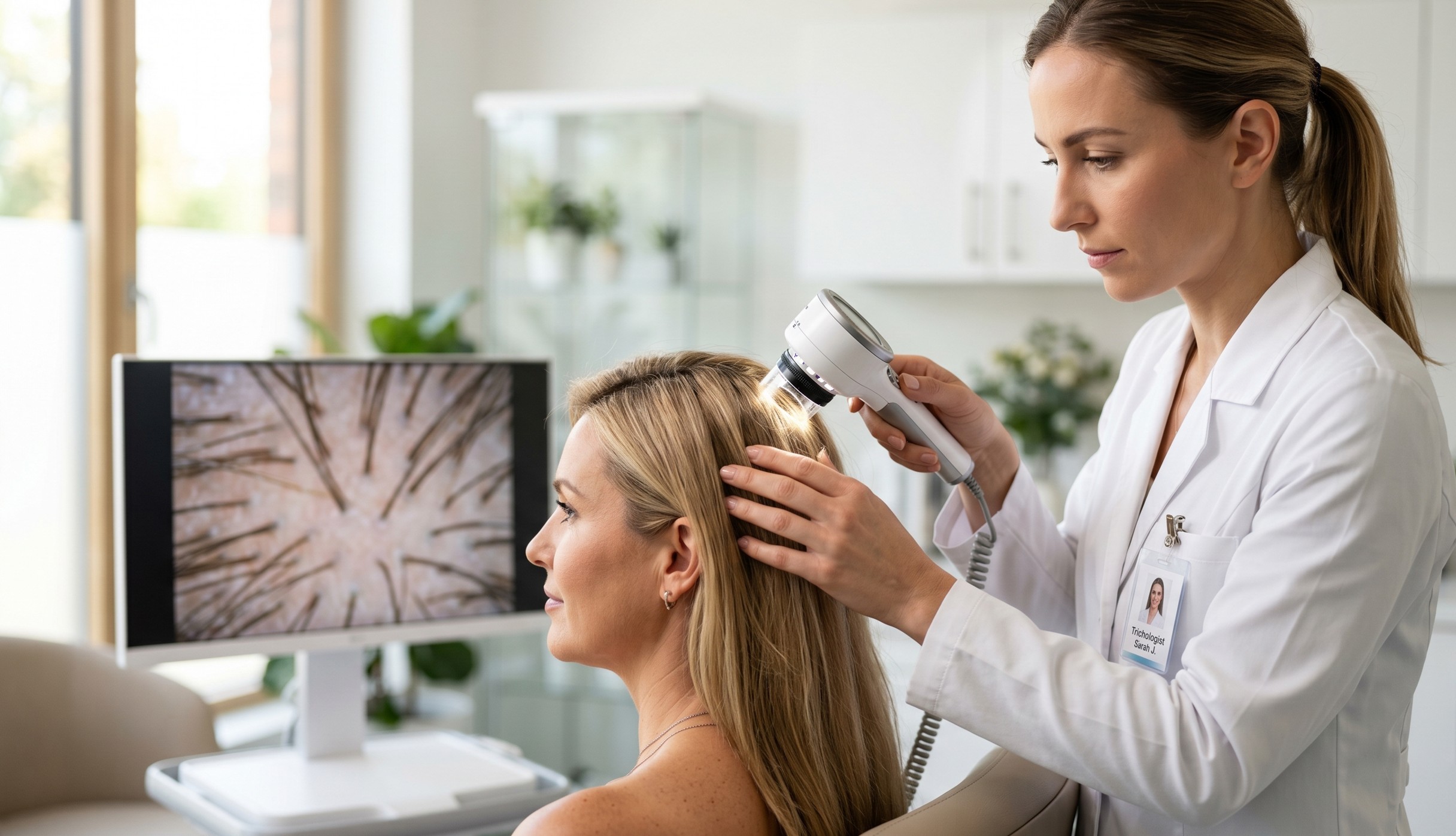
Professional Scalp Exfoliation in Waterford for Hair Preservation
A recent 2026 survey of nearly 1,500 women in Ireland revealed that hair thinning and loss is now the top concern for 28% of respondents...
Itchy Scalp and Hair Loss Solution, Expert Advice
What if that persistent, nagging itch is more than just a minor irritation? For many people across Ireland, the urge to scratch in public is a source...
FUE Transplant Density Explained for Natural Looking Results
The highest graft count in the world cannot guarantee a successful restoration if the placement lacks clinical precision.It is common to feel a sense...
Preventing hair loss in your 30s men and clinical strategies for success
Did you know that by the age of 35, approximately two-thirds of men will experience some degree of noticeable hair loss?It is a startling statistic...

Women’s Hair Loss Specialist Waterford | Expert Clinical Solutions in 2026
Did you know that 28% of women in Ireland now rank thinning hair as their primary beauty concern, even above dryness or breakage?If you have spent your...

Expert Hair Loss Services in Cork for Men and Women
Did you know that over 80% of Irish men surveyed by DHI reported that hair loss has negatively impacted their self-confidence?It's a heavy burden to carry...