
 2 Camden Pl, Patrick’s Bridge,
Home > Latest News & Guides > Laser Hair Therapy at Home vs Clinic for Hair Growth in 2026
Laser Hair Therapy at Home vs Clinic for Hair Growth in 2026
Contact us today
Date added: 27/05/26
The most convenient option might actually be the one that delays your recovery. When you are comparing laser hair therapy at home vs a clinic, it is easy to assume that a consumer-grade cap offers the same restorative power as a professional medical device.
However, the biological reality of follicle stimulation often requires an intensity that smaller, battery-powered gadgets simply cannot match.
We understand the frustration of watching your hair thin whilst navigating a market filled with confusing claims and hair removal devices masquerading as growth tools.
You don't want to waste your time or money on ineffective solutions.
You deserve a treatment plan that prioritises safety and proven results over mere convenience. In this article, you will discover the critical differences in power, clinical oversight, and long-term hair density outcomes.
We provide the clarity you need to choose a path that offers a genuine return on your investment and restores your self-image through a grounded, medical perspective.
Key Takeaways
- Understand how photobiomodulation stimulates cellular energy to extend the hair growth phase and improve density.
- Compare the medical-grade power and scalp coverage of laser hair therapy at home vs clinic to make an informed choice for your restoration journey.
- Learn why professional supervision in a clinical setting ensures your treatment plan remains safe and effective as your needs evolve.
- Assess the cost-effectiveness of each option by weighing the convenience of home devices against the faster results seen with high-intensity clinical lasers.
- Determine the best strategy for your specific level of hair loss whilst ensuring you don't miss the biological window for effective intervention.
Table of Contents
-
Benefits of Clinical Laser Hair Therapy for Significant Thinning
-
Comparing Costs and Results of Home vs Professional Treatment
If you are ready to explore a personalised approach to restoration, you can speak with our specialists today to discuss your options.
The Science of Low Level Laser Therapy for Hair Restoration
The biological foundation of hair regrowth relies on a process called photobiomodulation. This mechanism involves the use of non-thermal red light, typically within the 630 to 680 nanometre range, to penetrate the scalp and reach the hair follicles. Unlike lasers used for hair removal, which use high heat to destroy the follicle, The Science of Low Level Laser Therapy focuses on healing and stimulation. These cold lasers provide the energy density required to trigger cellular activity without causing any damage to the skin or surrounding tissue.
When considering laser hair therapy at home vs clinic, the primary difference often lies in the precision of the wavelength and the stability of the energy delivered. Clinical devices are engineered to maintain a constant output that ensures every follicle receives the correct dose of light. This light energy increases local blood flow, which delivers essential nutrients and oxygen to the root of the hair whilst removing waste products that can stifle growth.
How LLLT Reverses the Thinning Process
At a cellular level, laser therapy works by stimulating the mitochondria within the hair cells. These tiny powerhouses absorb the light and produce more adenosine triphosphate, or ATP, which is the primary energy source for cellular repair. This surge in energy helps to reduce the chronic inflammation that frequently accompanies androgenetic alopecia. By calming this inflammatory response, the therapy encourages follicles to transition from a dormant resting state back into the active anagen or growing phase. A 2013 study involving 41 males found that this specific type of laser treatment resulted in a 39 per cent increase in hair growth over just 16 weeks.
The Importance of Consistency in Laser Therapy
Success in hair restoration is never an overnight achievement. It requires a disciplined schedule maintained over several months to align with the natural growth cycles of your hair. There is a specific biological window of opportunity where intervention is most effective; once a follicle has completely miniaturised and scarred over, it can no longer be revived. Whilst some patients attempt to manage this themselves, professional treatments provide the structured environment necessary to ensure no sessions are missed. This level of oversight is a key factor when evaluating laser hair therapy at home vs clinic, as clinical protocols are designed to maximise compliance and adapt to your individual rate of progress.
If you are unsure whether your current home device is providing the necessary intensity, you can reach out to our team for a professional assessment of your hair restoration needs.
Analysis of At Home Laser Devices and Their Limitations
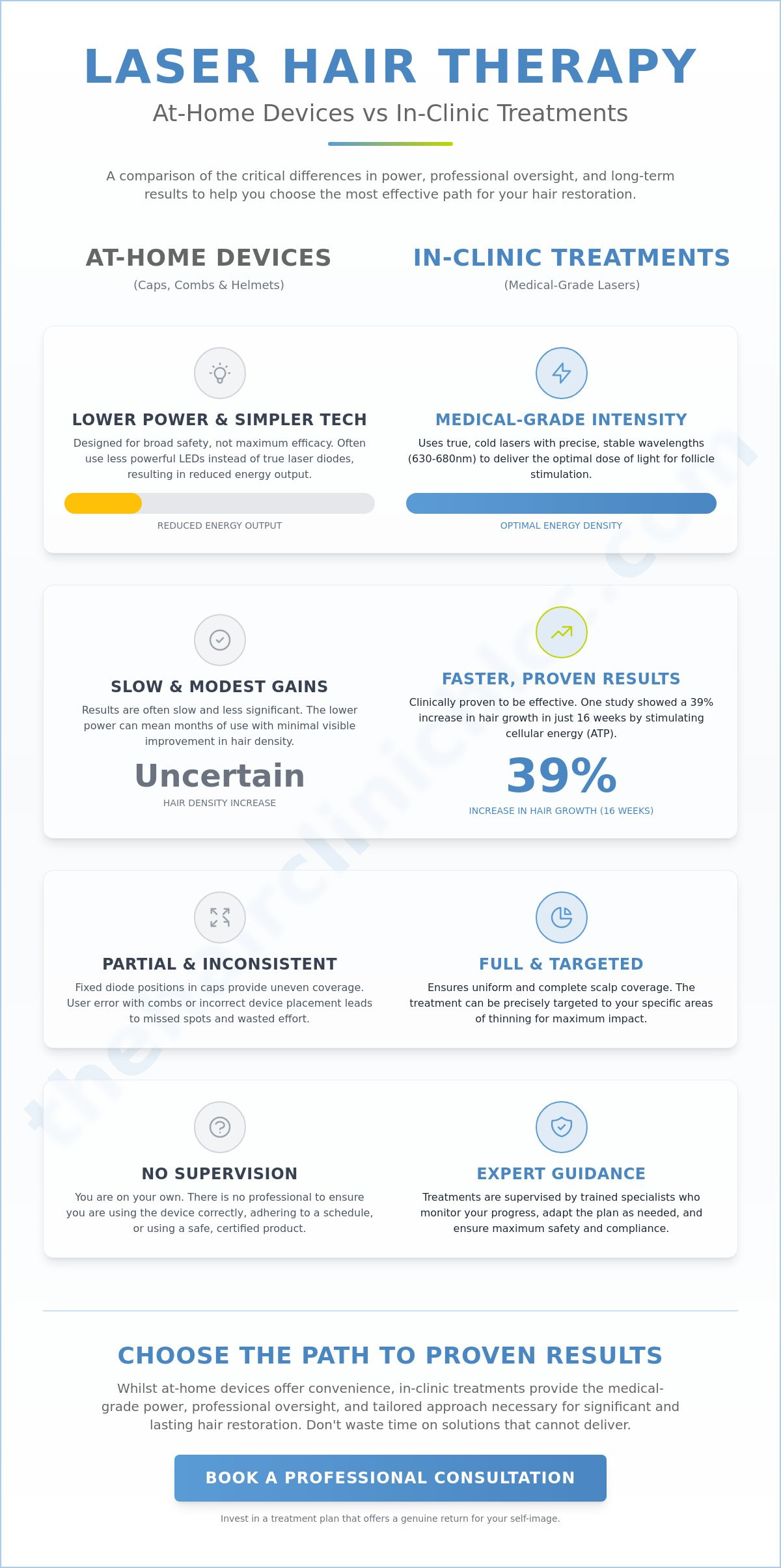
The rise of consumer electronics has made it possible to purchase laser caps, helmets, and handheld combs for use in the privacy of your own home. These devices are often marketed as a convenient, one-time investment for those noticing the first signs of thinning. Whilst the appeal of a portable solution is clear, the technical reality of laser hair therapy at home vs clinic involves a significant trade-off in power and precision. Most consumer gadgets are designed for broad safety rather than maximum efficacy, which often results in a lower diode count and reduced energy output compared to medical-grade equipment.
User error also plays a substantial role in the effectiveness of home treatments. Handheld combs require a steady hand and a very specific movement speed to ensure each section of the scalp receives enough light. Even with caps and helmets, simply wearing the device slightly off-centre or failing to part the hair correctly can leave the most vulnerable follicles without adequate exposure. Without professional guidance, many individuals find themselves guessing if they are applying the treatment correctly, which can lead to months of wasted effort.
Pros and Cons of Home Laser Caps
The primary benefit of a laser cap is the ability to maintain a treatment schedule whilst performing daily tasks. This privacy is invaluable for many, yet it comes with a distinct drawback. Most home caps have fixed diode positions that cannot be adjusted to target your specific areas of thinning. Furthermore, the market is flooded with uncertified or low-quality devices that may use simple red LEDs instead of true laser diodes. According to Clinical studies on LLLT, the success of the treatment is contingent on the correct wavelength and energy density reaching the base of the follicle, something many budget devices fail to deliver.
Why Power Output Matters for Results
The difference between consumer-grade units and clinical machines often comes down to the source of the light. Many home devices rely on battery power, which can fluctuate and limit the depth of follicle penetration. Clinical systems are mains-powered and utilise high-intensity laser diodes that provide 100 per cent scalp coverage. This ensures that the light energy reaches the dermal papilla, where hair growth begins. If you have already invested in a home device but aren't seeing the results you expected, it may be time to consult with a specialist to bridge the gap in your treatment plan.
If you are ready to take a proactive step towards restoring your hair density, you can book an assessment with our specialists to determine the most effective path forward for your specific condition.
Benefits of Clinical Laser Hair Therapy for Significant Thinning
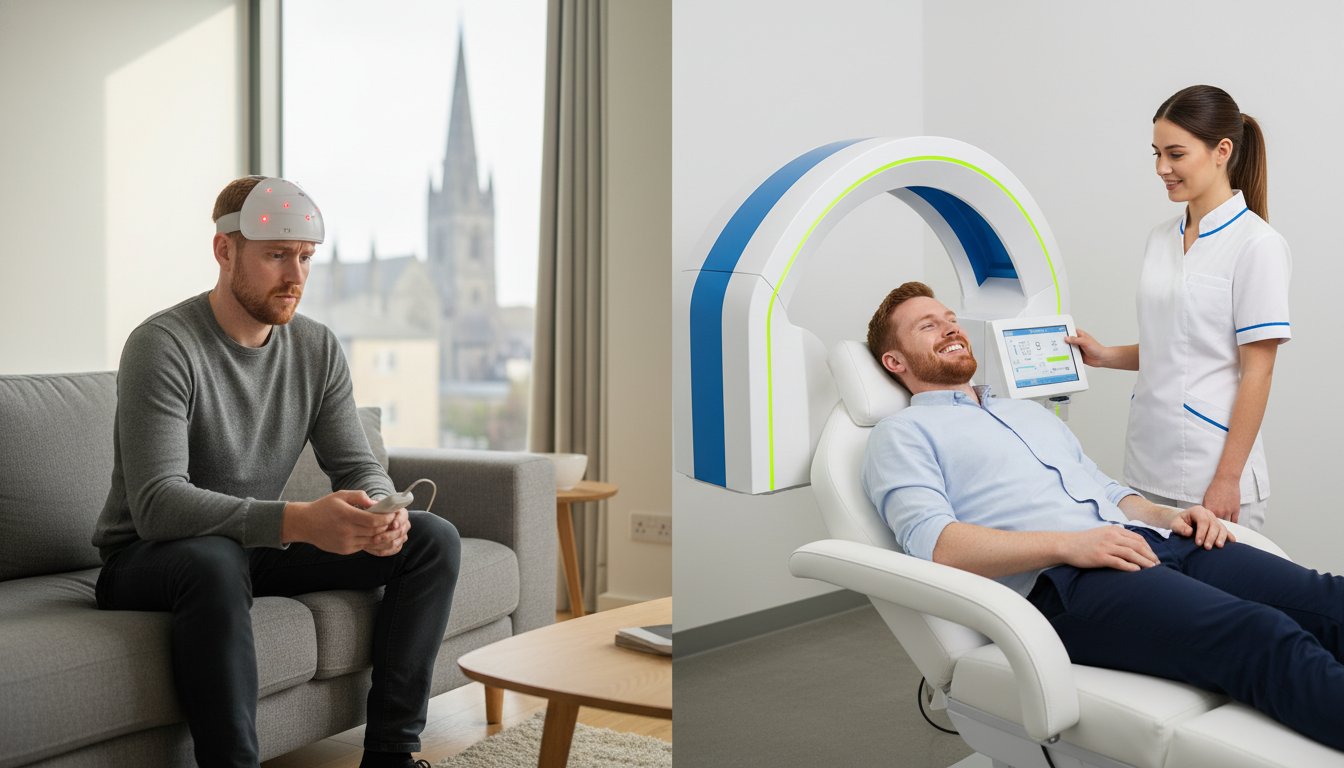
Clinical laser hair therapy offers a level of medical-grade intensity that consumer devices simply cannot replicate. Whilst home caps are limited by battery life and physical size, clinical hoods utilise high-output diodes that are precisely calibrated to ensure 100 per cent scalp coverage. This is particularly important for individuals experiencing significant thinning, where every millimetre of the scalp requires consistent, high-energy stimulation to trigger a biological change. In a professional setting, the equipment is mains-powered and maintained to strict standards, ensuring that the energy delivery remains stable throughout your entire session.
The clinical environment provides more than just powerful hardware; it offers a structured and supervised approach to hair restoration. Research published by the NCBI on Low-Level Laser Therapy for Hair Loss highlights that whilst LLLT is a safe alternative to surgery, its efficacy is deeply tied to the quality of the light source and the consistency of application. In a professional clinic, every session is monitored, removing the guesswork often found in the debate of laser hair therapy at home vs clinic. This professional oversight ensures that you are not just using a device, but following a scientifically backed protocol designed for your unique scalp environment.
The Role of Professional Scalp Analysis
Before any treatment begins, a professional diagnosis is vital to ensure you are using the correct tools for your type of hair loss. We use high-magnification cameras to examine the scalp in detail, identifying specific issues such as DHT buildup, chronic inflammation, or follicle miniaturisation. Conditions like Telogen Effluvium or androgenetic alopecia require different management strategies. Without this initial analysis, many people spend months using home devices on follicles that may already be beyond the biological window of recovery. Tracking your progress with medical imaging allows us to adjust your programme based on actual data rather than subjective observation.
Customised Treatment Protocols
No two scalps are identical, and a standardised approach often leads to suboptimal results. Clinics tailor the duration and frequency of sessions to suit your individual rate of hair loss and lifestyle. We often combine LLLT with medical solutions for men or specialised programmes for women to create a multi-therapeutic effect. This synergy between laser energy and clinical scalp hygiene treatments improves the absorption of topical solutions, leading to better outcomes than laser therapy alone. Receiving care in a specialised medical environment also provides a sense of security and reassurance, moving you from a state of worry toward a proactive and hopeful solution.
To understand the long-term value of a professional plan, you can contact our clinic for a detailed consultation regarding your restoration journey.
Comparing Costs and Results of Home vs Professional Treatment
When evaluating laser hair therapy at home vs clinic, the initial price tag often dictates the choice. A reputable home device usually requires a significant upfront payment. Whilst this seems cost-effective, it does not account for the biological cost of potential failure. If a consumer-grade gadget fails to stimulate growth during your peak window of opportunity, the financial loss is compounded by the irreversible loss of follicles. Clinical therapy involves a per-session cost, but this investment includes professional monitoring and medical-grade equipment. This ensures you aren't just spending money, but buying time. Expert guidance helps you avoid the common trap of gadget fatigue where ineffective tools are abandoned after months of no progress.
Timeline for Hair Regrowth
Clinical protocols typically produce visible changes within the first three months. Results speak for themselves. During this period, the primary goal is the stabilisation of hair loss, where the excessive shedding begins to slow down. Home devices often take twice as long to show even minor improvements because they lack the energy density required for deep penetration. By the six-month mark, clinical patients often report significant density increases. Home users may still be struggling with consistency and positioning at this stage. This difference in speed is crucial. Your self-image is deeply affected by your condition. Professional therapy prioritises the transition of follicles into the anagen phase with greater precision.
Safety and Regulatory Standards
Safety is a paramount concern that is often overlooked in the search for a bargain. Safety must come first. Clinical machines are subject to rigorous testing and must adhere to strict safety codes within Ireland. These devices are operated by specialists who ensure the laser light is delivered safely to the scalp without risk to the eyes. In contrast, unregulated home devices purchased online may lack proper shielding or automatic shut-off features. Scalp irritation and inconsistent light delivery are common issues with budget units. Choosing a clinical environment provides the peace of mind that your treatment is both effective and biologically safe. Regular calibration of clinical equipment ensures that the energy output remains at therapeutic levels for every single session.
If you are concerned about the safety or effectiveness of your current routine, you can schedule a professional review to ensure your scalp health is prioritised.
If you are ready to determine the most effective strategy for your specific hair restoration needs, you can reach out to our specialists today for a comprehensive assessment.
Selecting the Right Restoration Strategy for Your Needs
Choosing the right path requires an honest assessment of your current hair density. Whilst home devices serve a purpose for maintenance, they are rarely sufficient for those in the midst of active thinning. The decision regarding laser hair therapy at home vs clinic should be based on the biological stage of your follicles. If you notice your scalp becoming visible through your hair, the window for effective intervention is narrowing. Home devices are often best reserved for individuals who have already achieved their desired density through clinical means and simply wish to preserve those results.
If you have already spent months using a laser comb or cap with little to no visible improvement, it is a clear sign that your follicles require a higher energy density. Transitioning from home use to professional therapy allows you to benefit from medical-grade intensity whilst receiving the clinical oversight necessary to track your progress accurately. This shift often moves patients from a state of frustration to one of proactive recovery. Our veteran specialists act as dedicated partners in your journey, ensuring that every session is optimised for your specific rate of hair loss.
Identifying Your Type of Hair Loss
Different conditions respond differently to light energy. For example, women with thinning hair often see remarkable results from clinical LLLT because it addresses the diffuse thinning patterns that home caps might miss. Other conditions that require a more robust approach include:
-
Telogen Effluvium: This temporary but stressful shedding benefits from the stabilising effect of high-intensity clinical lasers.
-
Traction Alopecia: Follicles damaged by physical tension require targeted stimulation to revive dormant roots.
-
Advanced Male Pattern Baldness: Once thinning has progressed significantly, only the energy density of clinical hoods can provide the depth of penetration needed for regrowth.
Next Steps for Your Hair Journey
Deciding to seek professional help is a significant step toward reclaiming your self-image. Your journey begins with a detailed consultation at one of our centres in Cork or Waterford. During this initial assessment, we encourage you to ask your specialist about the specific laser technology used and how it differs from consumer electronics. We value transparency and want you to feel secure in the treatment plan we create together. A multi-therapeutic approach often yields the best results, combining LLLT with professional scalp hygiene to ensure the best possible environment for new growth. This grounded, medical perspective ensures that your expectations are managed with honesty and that your treatment remains safe and effective over the long term.
Before exploring the technical differences, you may wish to speak with a specialist about your hair loss concerns to understand which options are available to you.
Take the Next Step Toward Lasting Hair Restoration
Understanding the critical differences of laser hair therapy at home vs clinic is the first step toward reclaiming your confidence. Whilst home gadgets offer a degree of convenience, the high-intensity power and supervised protocols of a professional clinic are essential for those facing active thinning. It's about finding the right tool for your specific biological needs before the window of recovery closes. Choosing a clinical path ensures that your treatment is monitored by experts who can adjust your plan based on real-time data and follicle health.
As an independently owned Irish clinic since 2005, we utilise HLCC global treatment protocols to ensure the highest standards of safety and efficacy. We understand the emotional weight of hair loss and provide a supportive environment for your restoration journey. You can begin this process with one of our complimentary initial hair and scalp assessments to gain a clear, medical understanding of your condition. To move from a state of worry toward a proactive solution, book your professional assessment today. There is hope for your hair, and we are here to help you restore your self-image with precision and care.
Frequently Asked Questions
Is at home laser hair therapy effective for advanced balding
At home devices are generally not effective for advanced stages of balding where the scalp has become smooth and shiny. Once hair follicles have completely miniaturised and reached a state of scarring, they can no longer be revived by light energy. These consumer gadgets are better suited for the early signs of thinning. Clinical intervention is usually required to address more significant hair loss before the biological window of opportunity closes.
How long does a professional clinical laser session typically last
A professional session usually lasts between 20 and 30 minutes. During this time, you sit comfortably beneath a medical grade laser hood that provides 100 per cent coverage of the scalp. This duration is scientifically calibrated to deliver the precise amount of energy needed to stimulate the mitochondria without over saturating the cells. It is a relaxing and non-invasive process that fits easily into a standard daily routine.
Can I use home laser devices alongside my clinical treatments
You can certainly use home devices as a maintenance tool whilst undergoing professional therapy. Many patients find that using a laser cap between clinical visits helps to keep cellular energy levels high. However, it is vital to coordinate this with your specialist to avoid over stimulation. When comparing laser hair therapy at home vs clinic, the professional sessions provide the primary restorative power whilst the home units support the stabilisation phase.
What is the success rate of clinical LLLT for women in Ireland
Clinical LLLT shows high effectiveness for women in Ireland, particularly those suffering from diffuse thinning or telogen effluvium. Because the treatment addresses the underlying cellular health of the follicle, it is a preferred choice for women who wish to avoid more invasive procedures. Success is most common when the therapy is started early. Most patients report a noticeable increase in hair volume and a significant reduction in daily shedding within several months.
Are there any known side effects to professional laser hair therapy
Professional laser hair therapy is a low risk treatment with an excellent safety profile. Unlike surgical options, there is no downtime and no risk of scarring. Some patients might notice a very mild redness on the scalp or a slight tingling sensation immediately after their session, but these effects usually fade within an hour. It is a cold laser technology, so there is no risk of burning the skin or damaging the hair shafts.
How many clinical sessions are usually needed before seeing new hair growth
Most patients begin to see a visible difference after 12 to 24 sessions. The first sign of success is typically a stabilisation of hair loss, meaning you will notice less hair in the shower or on your brush. Actual regrowth and increased density usually follow as the follicles move back into the active growth phase. Consistency is the most important factor in this timeline, as the biological response requires regular stimulation over four to six months.
Is there a specific age limit for starting laser hair therapy
There is no specific age limit for beginning this treatment. It is effective for adults of all ages, provided that the hair follicles are still active and have not reached the point of permanent scarring. Younger individuals often use the therapy to proactively manage early thinning, whilst older patients use it to maintain density and hair quality. A professional scalp analysis is the best way to determine if the treatment is appropriate for your age and condition.
Does laser hair therapy work for all hair colours and types
Laser therapy is effective for all hair colours and hair types, including grey or light blonde hair. This is because the technology does not rely on melanin or pigment to work. Instead, the light energy targets the mitochondria within the cells of the hair follicle. Whether your hair is straight, curly, dark, or light, the biological stimulation remains the same. This makes it a versatile restoration option for a wide range of patients in our community.
Article by
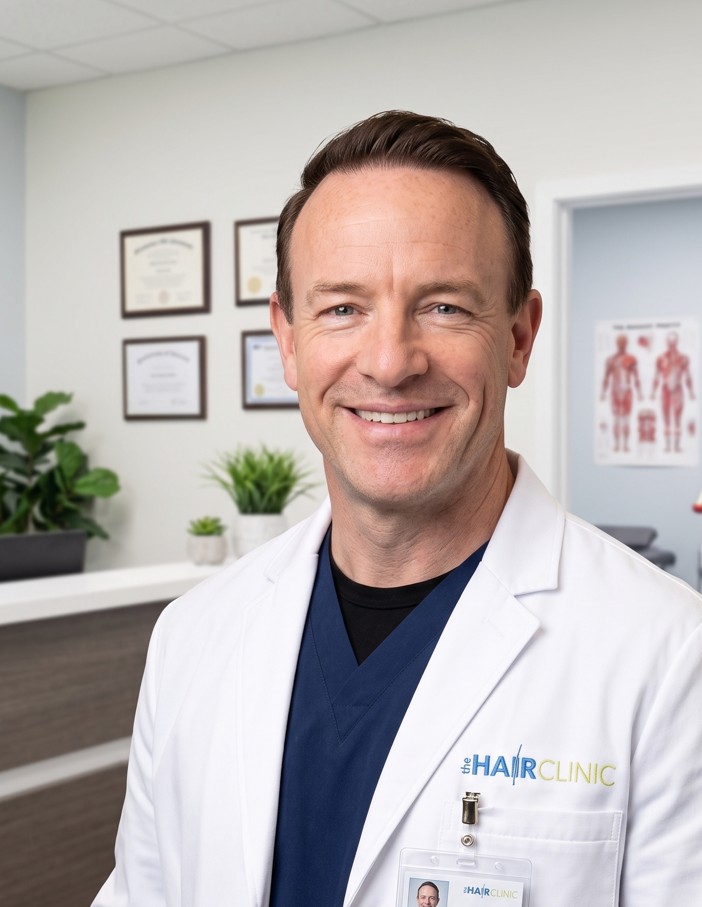
Mark O'Sullivan
As Director of The Hair Clinic in Cork and Waterford, I am dedicated to helping our patients address their hair loss through expert trichological care. Our team provides professional laser hair treatments and personalised solutions to help clients restore their confidence.
Disclaimer
Please note that the information provided is for general guidance only and should not be taken as professional advice tailored to your specific circumstances.
Find out if Laser Hair Therapy is right for you
At The Hair Clinic, we make managing thinning hair simple and stress free. No more worrying about which products to trust, as we do all the hard work for you. Our Cork & Waterfood teams are here to help you find the perfect, clinically proven treatment plan to suit your goals.
Want to know how laser therapy can stimulate growth and what kind of results you could expect?
No problem. Get in touch with our friendly team today to book your free consultation, and we’ll be happy to help.
Related Hair Treatment News & Guides
If you liked this guide then you may also like the following:
Minoxidil Not Working? Professional Next Steps for Hair Restoration
What if the reason your hair isn't growing has nothing to do with the solution itself, but everything to do with how your scalp is receiving it?You've...
Is Laser Hair Therapy Permanent? What to Expect from LLLT Results
What if the secret to keeping your hair isn't a one-time cure, but a lifelong partnership with your follicles?Many patients ask whether laser hair therapy...
Traction Alopecia Recovery Plan and Professional Clinical Solutions
Your hairline isn't necessarily gone for good, but the clock is ticking on its biological ability to recover.You have likely spent mornings in front...
Laser Hair Therapy in Ireland for Natural Hair Regrowth
Did you know that 49% of Irish men under 30 believe they are already experiencing hair loss? For many, the sight of a visible scalp in the mirror is...
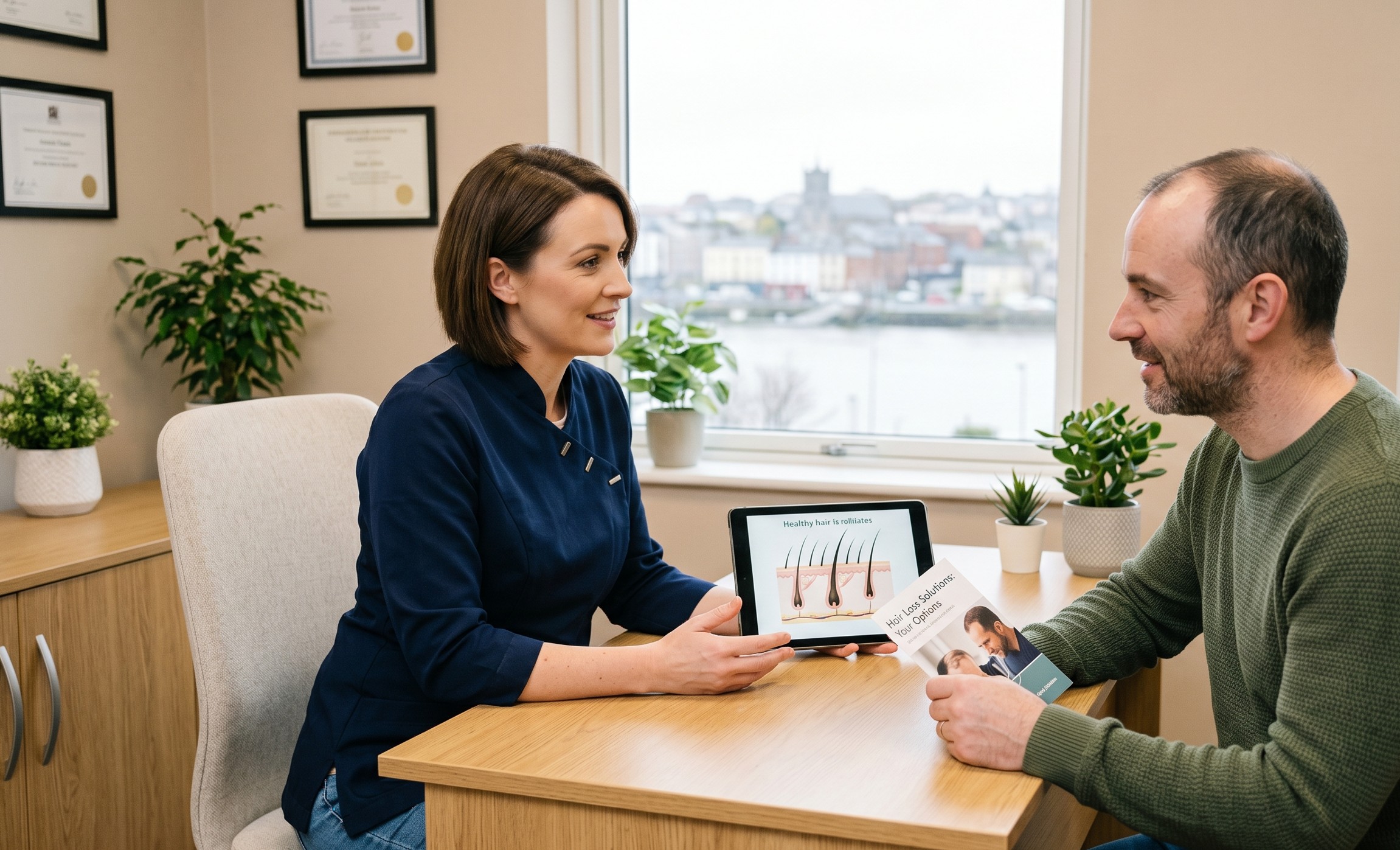
Affordable Hair Loss Solutions in Waterford, LLLT Experts
Did you know that up to 85% of men and 50% of women will experience significant hair loss during their lifetime? It's a staggering figure that highlights...
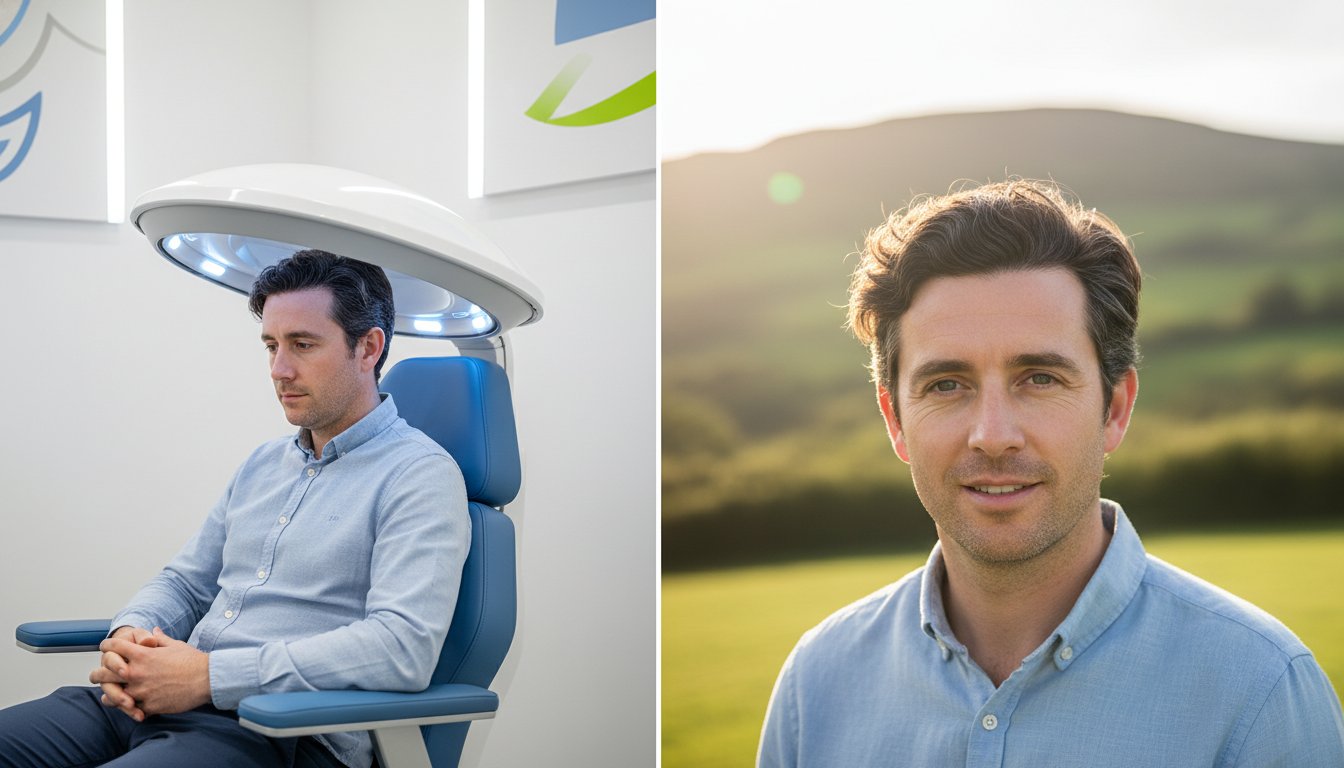
Laser Hair Therapy Cost in Ireland 2026 - Investment in Your Confidence
What if the most significant barrier to regaining your hair isn't the technology itself but the confusion about the required investment?For many people...